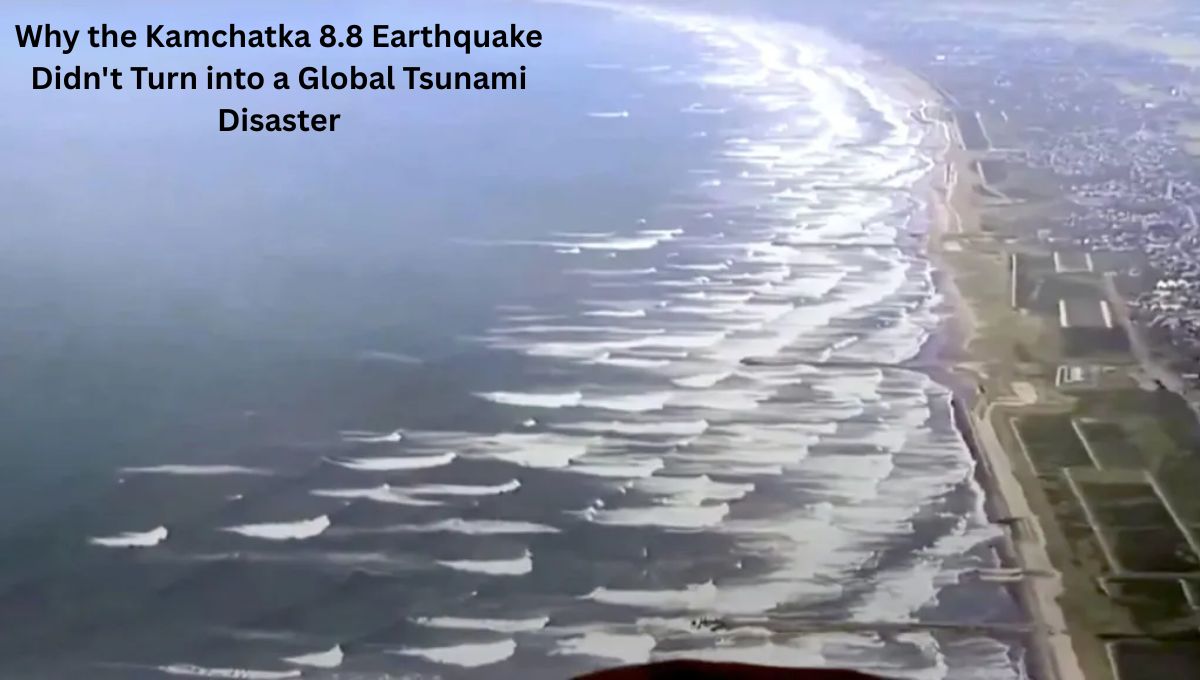
A megaquake with a milder aftermath: Why the Kamchatka 8.8 Earthquake Didn’t Turn into a Global Tsunami Disaster. On July 31, a massive 8.8-magnitude earthquake struck near Russia’s remote Kamchatka Peninsula, triggering global tsunami warnings and reviving memories of devastating past disasters like the 2004 Indian Ocean tsunami and Japan’s 2011 catastrophe. From Hawaii to Chile, sirens blared, cruise ships fled, and coastlines emptied.
But when the waves finally hit, the damage was far less severe than many had feared. So, why didn’t this powerful earthquake cause a devastating tsunami? And what can this tell us about seismic threats along the Pacific Ring of Fire?
Let’s break down what happened and why the worst-case scenario didn’t play out.
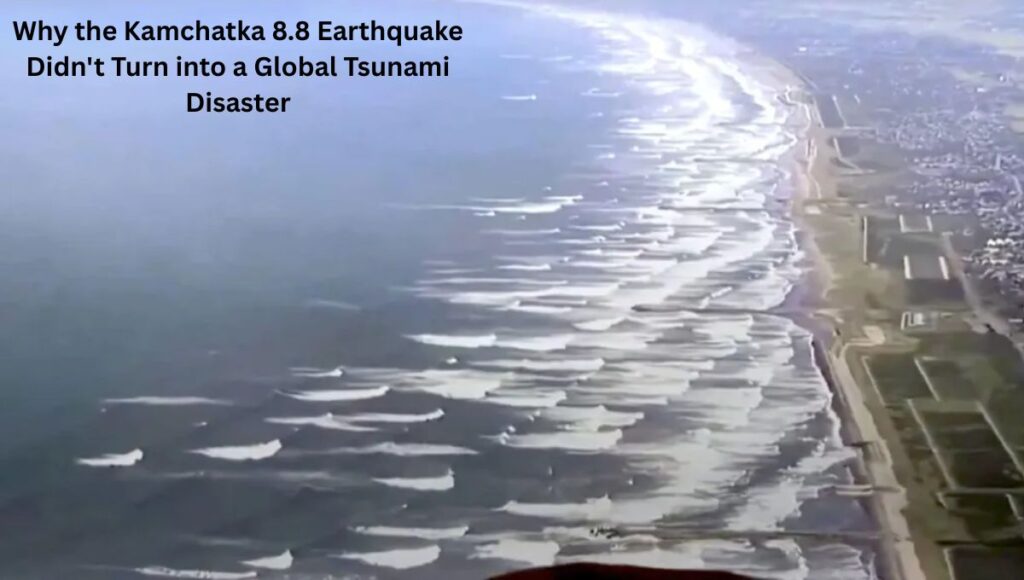
Why the Kamchatka 8.8 Earthquake Didn’t Turn into a Global Tsunami Disaster
Understanding the Kamchatka 8.8-Magnitude Earthquake
The Kamchatka Peninsula is located on the volatile Pacific Ring of Fire, a horseshoe-shaped belt of tectonic activity responsible for nearly 80% of the world’s earthquakes.
In this region, the Pacific Plate subducts under the Okhotsk microplate, building up immense pressure over decades or even centuries.
When that pressure is suddenly released, a megathrust earthquake can occur the most powerful kind of quake on Earth.
“Such earthquakes don’t occur at a single point,” said Dr. Stephen Hicks, a seismologist at University College London. “They rupture faults that stretch hundreds of kilometers, which is why they generate such high magnitudes.”
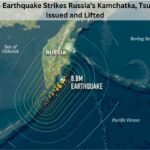
The quake near Petropavlovsk-Kamchatsky, a city of 165,000 residents, lasted more than three minutes, shaking buildings and triggering landslides.
According to the US Geological Survey, the quake’s depth was estimated at 19.3 km (12 miles), making it a shallow quake capable of displacing ocean water and creating tsunamis.
Why This Tsunami Was Less Destructive Than Feared
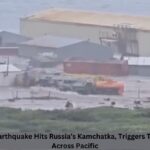
Despite the magnitude, tsunami waves recorded across the Pacific were relatively modest. Russia’s eastern coastline saw waves of up to 4 meters (13 feet), while Hawaii’s crests reached 5.7 feet, but widespread flooding was avoided.
Several critical factors played a role:
1. Depth and Epicenter Location
Although the quake was shallow by seismic standards, it may have occurred just deep enough to prevent maximum seafloor displacement, a key factor in tsunami generation.
Dr. Hicks noted that even a difference of 20 km deeper could have significantly reduced tsunami intensity.
2. Ocean Floor Shape and Coastal Geography
Experts like Prof. Lisa McNeill from the University of Southampton emphasized the role of bathymetry the shape and contours of the ocean floor.
Some regions, like Severo-Kurilsk, experienced flooding due to localized underwater topography, while others, including Alaska and British Columbia, saw only minor tidal changes.
3. Improved Early Warning Systems
One of the most significant differences from past disasters? Preparedness.
Since the 2004 Indian Ocean disaster, the Pacific Tsunami Warning Center and other global networks have developed highly advanced alert systems.
Within minutes, alerts were issued across Hawaii, Japan, Alaska, and the West Coast of the U.S., triggering widespread evacuations.
Hawaii’s Rapid Response: Panic, Cruise Chaos, and Calm
In Hawaii, emergency sirens blared across islands still recovering from the 2023 Maui wildfires.
Residents and tourists scrambled to higher ground. Cruise ships abandoned ports in Honolulu and Maui, leaving passengers behind in a panic.
Viral TikTok videos showed scenes of chaos:
“We’re going to be in the middle of the tsunami in the ocean!” shouted one stranded tourist.
Shelters opened, coastal water systems were shut down, and flights were temporarily grounded. But as the tsunami alert was downgraded later in the day, life began returning to normal.
Hawaii Governor Josh Green noted that while crests reached nearly 6 feet, no fatalities or major damage occurred thanks to rapid evacuations and public cooperation.
Cruise Ship Mayhem: Tourists Left Behind
Cruise liners, reacting swiftly to tsunami warnings, pulled away from ports sometimes without all their passengers.
“We made it to the port, but the ship is leaving. People are crying and scared. This is chaos,” shared @mandythecruiseplanner in a viral video.
Many tourists were caught off guard, unaware of the evacuation protocols. Hotel staff rushed to clear low-lying floors, while locals and tourists alike sought refuge inland.
Global Tsunami Alerts and Their Downgrades
Tsunami warnings extended across the Pacific Ocean, including:
- California: Waves of 3.6 feet at Crescent City
- Oregon & Washington: Minor tidal shifts
- Japan: 1.3-meter wave in Iwate; ferry and train services halted
- French Polynesia: 2.5-meter waves struck the Marquesas Islands
- Galapagos and Chile: Alerts issued, later lifted
While Japan evacuated nearly 2 million people, the tsunami impact remained mild.
Klyuchevskoy Volcano Eruption: A Ring of Fire Domino Effect?
Just hours after the quake, Russia’s Klyuchevskoy volcano, one of the tallest active volcanoes in the world, erupted spewing lava and ash into the sky.
Scientists noted that such volcanic activity often follows seismic disruptions in the Pacific Ring of Fire, due to shifting pressure in Earth’s crust.
Aftershocks and Ongoing Risk
Following the main 8.8 quake, aftershocks have continued to rattle the region. A 6.0-magnitude tremor struck the Kuril Islands, underscoring the ongoing seismic risk.
Experts from Russia’s Academy of Sciences (GS RAS) are closely monitoring aftershock activity, which could continue for weeks or months.
The Ryo Tatsuki Prophecy: Coincidence or Warning?
Adding intrigue to the quake was the resurfacing of a 1999 manga prophecy by Japanese artist Ryo Tatsuki.
In her book The Future I Saw, she claimed a tsunami far stronger than 2011 would follow an underwater rupture between Japan and the Philippines.
Though the July 5, 2025 date passed without incident, many online pointed to the July 31 Kamchatka quake as eerily close to her prediction.
Social media hashtags like #July5Disaster and references to Tatsuki as the “Japanese Baba Vanga” went viral.
But scientists remain skeptical.
“Earthquakes are natural events caused by tectonic movement. They cannot be predicted by dreams or visions,” said Prof. Sekiya Naoya of the University of Tokyo.
Heroic Moments: Surgery During the Earthquake
Amid the chaos, incredible moments of bravery surfaced. In Kamchatka, doctors continued surgery during intense shaking, manually steadying the operating table.
The video, shared by Russia’s Ministry of Health, went viral.
Final Thoughts: A Wake-Up Call, Not a Catastrophe
The Kamchatka 8.8 earthquake was among the most powerful seismic events in modern history. It shook cities, tested systems, and rattled nerves across the Pacific Basin.
But unlike the catastrophes of the past, this time, disaster was largely avoided thanks to science, improved infrastructure, and global readiness.
From panicked tourists in Hawaii to evacuated Japanese coastlines, the world got a sobering reminder of nature’s power. Yet it also revealed how far we’ve come in understanding and mitigating such threats.
Whether or not prophecies come true, what matters most is relying on science, early-warning systems, and public preparedness.
Conclusion: Lessons from the Pacific Ring of Fire
This event reinforces a critical truth: the Pacific Ring of Fire remains one of the most dangerous seismic zones on the planet. While we cannot predict earthquakes, we can reduce their toll through education, rapid response, and robust infrastructure. In a world increasingly connected and increasingly vulnerable the Kamchatka quake may serve not as a harbinger of doom, but a call to stay prepared.
Also Read: 600-Year Dormant Russian Volcano Erupts After Megaquake, Sparks Tsunami Alerts
Also Read: After massive 8.8-magnitude earthquake in Kamchatka, fears rise over strategic Russian base