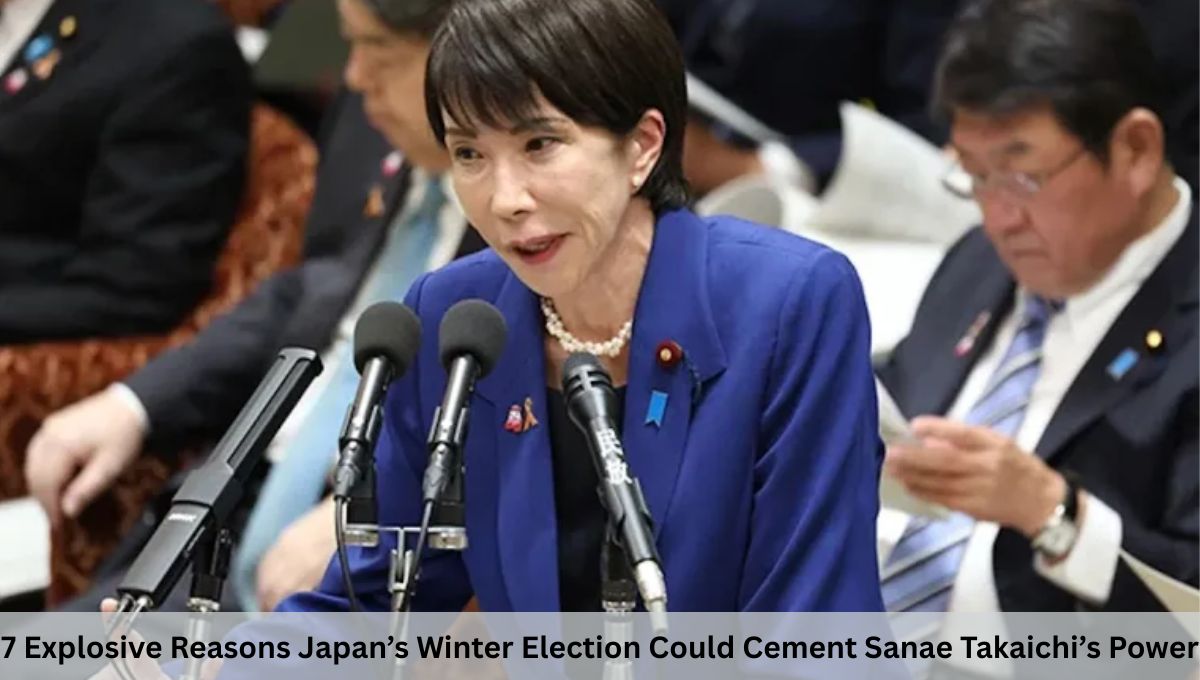
7 Explosive Reasons Japan’s Winter Election Could Cement Sanae Takaichi’s Power and secure a decisive conservative mandate.Japan is voting in one of the most consequential elections of its modern political history, as Prime Minister Sanae Takaichi seeks a sweeping mandate to entrench her conservative agenda amid economic strain, geopolitical uncertainty, and unprecedented winter conditions.
The snap parliamentary election, held in the depths of February snowstorms, is widely expected to deliver a resounding victory for Takaichi’s ruling coalition. If confirmed, the result would consolidate her authority at home and potentially reshape Japan’s domestic and foreign policy for years to come.
Polling stations opened across the country on Sunday, with voters braving freezing temperatures and heavy snowfall to elect all 465 members of the House of Representatives, Japan’s powerful lower chamber.
7 Explosive Reasons Japan’s Winter Election Could Cement Sanae Takaichi’s Power
A High-Stakes Vote for Japan’s First Female Prime Minister
Sanae Takaichi, 64, became Japan’s first female prime minister in October after winning the leadership of the long-dominant Liberal Democratic Party (LDP).
Her rise followed years of political turbulence, party scandals, and voter fatigue with revolving-door leadership.
Now, just months into her premiership, Takaichi has staked her political future on this election.
“If the LDP fails to win a majority, I will step down,” she has repeatedly said.
That pledge transformed Sunday’s vote into a de facto referendum on her leadership, style, and ideology.
Polls Point to a Landslide for the Ruling Coalition
Multiple opinion polls suggest that Takaichi’s conservative coalition — comprising the LDP and the Japan Innovation Party (Ishin) — could secure more than 300 seats, a dramatic leap from the 233 seats currently being defended.
Some surveys even indicate the LDP could regain a single-party majority, a milestone that would free Takaichi from reliance on coalition politics and internal party dissent.
Such a result would grant her unprecedented leverage to:
- Push through controversial legislation
- Override resistance from the upper house
- Accelerate reforms in defence, immigration, and economic policy
Why This Election Is Historically Unusual
A Rare Winter Vote
This is only the third post-war Japanese election held in February, with campaigns typically staged in spring or autumn to maximise turnout.
This year, however, voters face record snowfall in northern and eastern Japan, with up to 70 centimetres (27 inches) reported in some regions.
- Train lines suspended
- Flights cancelled
- Ferry routes halted
Despite these disruptions, authorities say polling stations remain operational nationwide.
Will Snowstorms Affect Turnout?
Analysts expect turnout to hover around mid-50%, consistent with recent elections.
However, harsh weather could disproportionately affect:
- Younger voters
- Urban commuters
- First-time voters
Ironically, these are also demographics where Takaichi enjoys strong personal popularity, especially among voters under 30.
The ‘Sanakatsu’ Phenomenon: Youth-Driven Politics
One of the most striking features of this election is Takaichi’s appeal to younger voters — an anomaly in Japanese politics.
Her fan base has sparked a social-media-driven craze dubbed “Sanakatsu” (roughly translated as Sanae-mania), encompassing:
- Viral demand for her fashion accessories
- Fan accounts tracking her speeches and travel
- Merchandise linked to her personal brand
Polls suggest over 80–90% of voters under 30 view Takaichi favourably — a remarkable figure in a country known for political apathy among youth.
Cost of Living Takes Centre Stage
Despite national security dominating headlines abroad, the rising cost of living is the top concern for voters at home.
Key Economic Pressures
- Inflation outpacing wage growth
- Weak yen increasing import costs
- Energy and food prices squeezing households
Japan’s economy grew just 1.1% last year and is projected to expand by only 0.7% in 2026, according to the IMF.
Takaichi’s Economic Promises
To counter voter anxiety, Takaichi has pledged:
- A two-year suspension of the 8% food sales tax
- Continued energy subsidies and cash handouts
- Aggressive investment in AI, semiconductors, and advanced manufacturing
Her government already approved a ¥21.3 trillion ($136 billion) stimulus package — the largest since the COVID-19 pandemic.
Markets Nervous Over Japan’s Growing Debt
While popular with voters, Takaichi’s tax-cut promises have unsettled investors.
Japan already carries the largest public debt burden among advanced economies, and critics warn that fiscal expansion could:
- Weaken the yen further
- Trigger bond market volatility
- Burden future generations
Still, supporters argue that growth-first policies are the only way to revive stagnant wages.
Defence, China, and a Break from Pacifism
A decisive election victory would also embolden Takaichi’s hawkish security agenda.
She has pledged to:
- Increase defence spending
- Lift Japan’s ban on weapons exports
- Expand offensive military capabilities
- Revise pacifist interpretations of the constitution
These moves reflect rising concern over China, North Korea, and uncertainty about long-term US security guarantees.
China Tensions and the Taiwan Question
Relations with Beijing have deteriorated sharply since Takaichi suggested Japan could respond militarily to a Chinese attack on Taiwan.
China retaliated by:
- Restricting Japanese seafood imports
- Tightening controls on rare-earth exports
- Warning citizens against travel to Japan
Nationalists praise Takaichi for “standing up to China,” while critics warn of economic fallout.
Immigration and Identity Politics
Takaichi has also embraced tougher immigration policies, including:
- Stricter rules for foreign property ownership
- A proposed cap on foreign residents
- Enhanced counter-espionage measures
These policies resonate with conservative and far-right voters, though civil rights groups warn of discrimination and social division.
Opposition Fragmented and Struggling
Despite public unease over debt and defence expansion, the opposition remains deeply divided.
Key Challenges Facing the Opposition
- No unified leadership
- Conflicting policy platforms
- Limited appeal beyond urban strongholds
The newly formed Centrist Reform Alliance, combining the Constitutional Democratic Party and Komeito, is projected to lose seats rather than gain ground.
Trump’s Endorsement and the US Alliance
Adding an unusual twist, US President Donald Trump publicly endorsed Takaichi days before the vote.
While foreign endorsements are rare in Japanese politics, the move had mixed effects:
Positive:
- Reinforces image of strong US-Japan alliance
- Appeals to conservative voters
Negative:
- Raises fears of trade pressure
- Sparks concern over Trump’s China strategy
Takaichi is scheduled to meet Trump at the White House in March.
What a Landslide Victory Would Mean
If the ruling coalition secures a supermajority, Takaichi would gain the power to:
- Override the upper house
- Fast-track legislation
- Lock in long-term strategic shifts
Analysts say it could mark Japan’s sharpest rightward shift in decades.
The Risks Ahead
Despite her popularity, expectations are sky-high.
Critics warn that:
- Debt-fuelled spending may backfire
- China tensions could hurt exports
- Immigration curbs may worsen labour shortages
Even supporters acknowledge that turning charisma into concrete results will be Takaichi’s toughest test yet.
Conclusion: A Defining Moment for Japan
Japan’s 2026 winter election is more than a vote — it is a defining moment for the country’s political direction.
Whether Sanae Takaichi emerges with a historic mandate or faces an unexpected setback, the outcome will shape:
- Japan’s economy
- Its role in Asia
- The future of its democracy
As snow blankets polling stations and voters cast their ballots, one truth is clear:
Japan stands at a crossroads.
Also Read: 30 Dead in Japan’s Brutal Snow Disaster as Record Storm Paralyzes Nation
Also Read: Japan holds rare winter elections, PM Sanae Takaichi expected to win: What we know so far
Related Posts:
- 12 Explosive Shifts as Japan’s Iron Lady Takaichi…

- Japan 2025: Conservative Powerhouse Sanae Takaichi…

- Sanae Takaichi Becomes Japan’s First Female Prime…

- Macron Reappoints Lecornu as PM 2025 – Triggers…

- Israel–Hamas Ceasefire Under Strain: 4 More Hostage…

- 7 Powerful Measures: Trump Sanctions Russian Oil…
