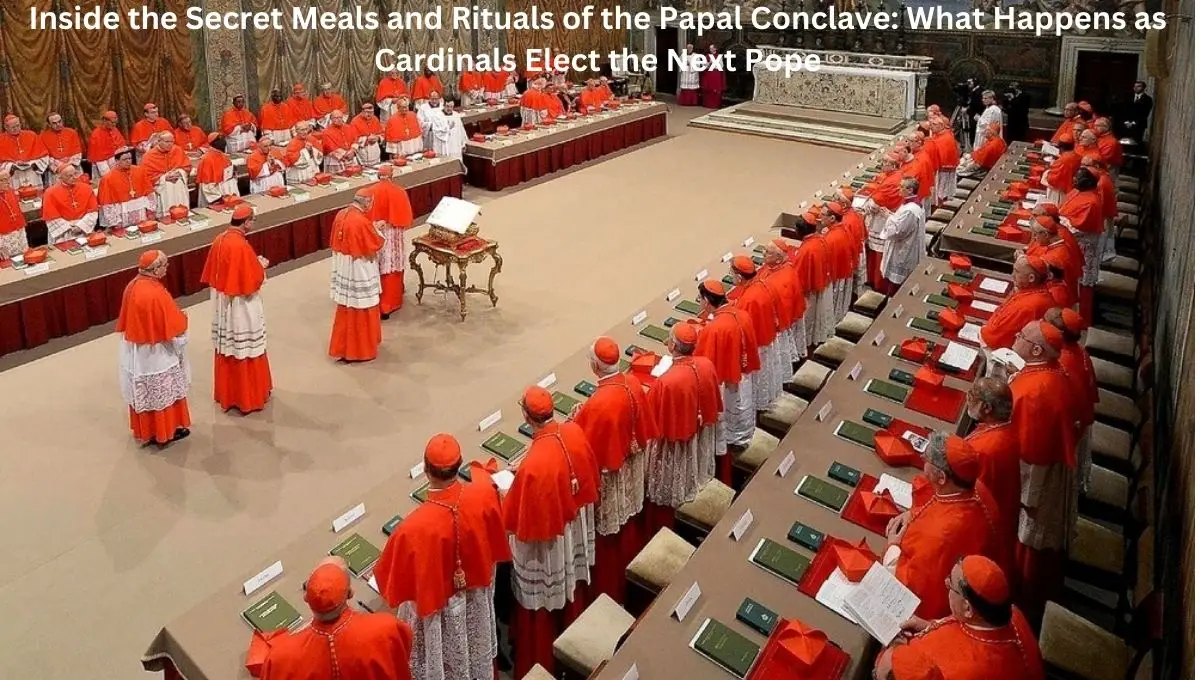
Before the cardinals elect the new pope let us look into what goes on Inside the Secret Meals and Rituals of the Papal Conclave:
What Happens as Cardinals Elect the Next Pope.
As the Vatican prepares for the highly anticipated papal conclave on May 7, intrigue surrounds not only the spiritual gravity of choosing the next pope but also the centuries-old traditions that govern how cardinals live, eat, and vote during the sacred process.
Following the passing of Pope Francis on April 21, 133 cardinal electors will enter the Sistine Chapel to begin one of the most secretive and consequential elections in the world.

Inside the Secret Meals and Rituals of the Papal Conclave: What Happens as Cardinals Elect the Next Pope
The Last Supper Before Isolation
Before being locked away in spiritual and physical seclusion, many cardinals take a final opportunity to indulge in Rome’s renowned cuisine. In 2013, several cardinals were spotted enjoying their favorite dishes at local restaurants Cardinal Donald Wuerl was known for his lasagna at Al Passetto di Borgo, while Cardinal Francesco Coccopalmerio favored grilled squid. These meals often mark a symbolic farewell to the outside world.
Meals Under Lock and Key: The Rules of the Conclave Kitchen
Once the conclave begins, the cardinal electors are completely cut off from outside communication, with smoke signals being the only public indication of progress. To preserve secrecy and prevent covert messaging, food rules have been strictly regulated since the 13th century.
The foundation for these culinary laws was established in 1274 by Pope Gregory X, who declared that if voting remained deadlocked after three days, cardinals would be rationed to one meal a day. If the deadlock persisted past eight days, they would be served only bread and water.
Though modern conclaves are more lenient, restrictions remain. Meals are prepared by nuns, and foods that could conceal messages—like pies or whole chickens—are banned. During the conclave, cardinals dine on simple dishes such as lamb skewers, boiled vegetables, and spaghetti, all under vigilant supervision.
Smoke Signals: How the World Learns of a New Pope
The traditional signal of papal election progress comes from the chimney atop the Sistine Chapel. Black smoke, produced by burning the ballots with potassium perchlorate and anthracene, indicates no decision. White smoke, generated using a mix of potassium chlorate, lactose, and chloroform resin, announces a successful election.
Preparations for this visual spectacle are already underway. On May 2, Vatican firefighters were seen installing the special chimney used for the ritual.
A Tradition Shaped by History: From Lock-Ins to Modern Reforms
The word “conclave” itself comes from the Latin cum clave, meaning “with a key.” This dates back to the 1268–1271 election following the death of Pope Clement IV, which became the longest papal conclave in history, lasting 1,006 days. Frustrated citizens of Viterbo literally locked the cardinals inside and stripped the roof off the building to hasten the process. Pope Gregory X, elected at its conclusion, institutionalized seclusion to prevent outside interference.
Since then, conclaves have evolved. While today’s cardinals sleep in relative comfort at the Domus Santa Marta guesthouse, earlier conclaves were far harsher. In the 16th and 17th centuries, cardinals endured “disgusting” and poorly ventilated conditions, sometimes leading to serious illness.
Who Votes and Who Doesn’t
Out of 252 cardinals worldwide, only those under the age of 80 may vote—currently 133. One notable absentee is Cardinal Angelo Becciu, who, despite being eligible, withdrew voluntarily on April 29, citing loyalty to the late Pope Francis. Becciu was previously convicted of embezzlement but maintains his innocence.
Fun Facts: Unusual Truths About Papal Elections
The shortest conclave: Pope Julius II was elected in just a few hours in 1503.
The youngest pope: John XII, elected at age 18 in 955.
The oldest popes: Celestine III and Celestine V, both elected near age 85.
Not all conclaves were in the Sistine Chapel: Some were held as far away as France and Germany. Anyone can be Pope: Though rare, any baptized Catholic male is technically eligible. The last non-cardinal pope was Urban VI in 1378.
Spectators, Screenplays, and Surging Tourism
Rome is bracing for an influx of visitors. According to Forbes, flight searches from the U.S. to Rome have surged 345%, with an even more dramatic 1000% increase from Mexico. Over 100,000 are expected to gather outside the Vatican, watching for the moment white smoke rises.
The conclave has inspired a wave of media interest. The 2024 film Conclave, based on Robert Harris’s novel, won an Academy Award for Best Adapted Screenplay and saw a 283% spike in viewership following Pope Francis’s death. Similarly, Netflix’s The Two Popes experienced a 417% rise in viewership, proving the enduring fascination with the inner workings of the papacy.
Final Thoughts
As 133 cardinals gather behind closed doors in the Sistine Chapel, they do so with solemn purpose and rich tradition guiding them. The world will watch the sky above the Vatican, waiting for the next puff of smoke—one that may carry the weight of history and hope for millions of Catholics across the globe.
Also Read: Who Will Lead the Catholic Church Next? A Look at the Top Contenders for Pope
Also Read: Here’s what cardinals eat during the conclave — and why ravioli and roast chicken were banned


