
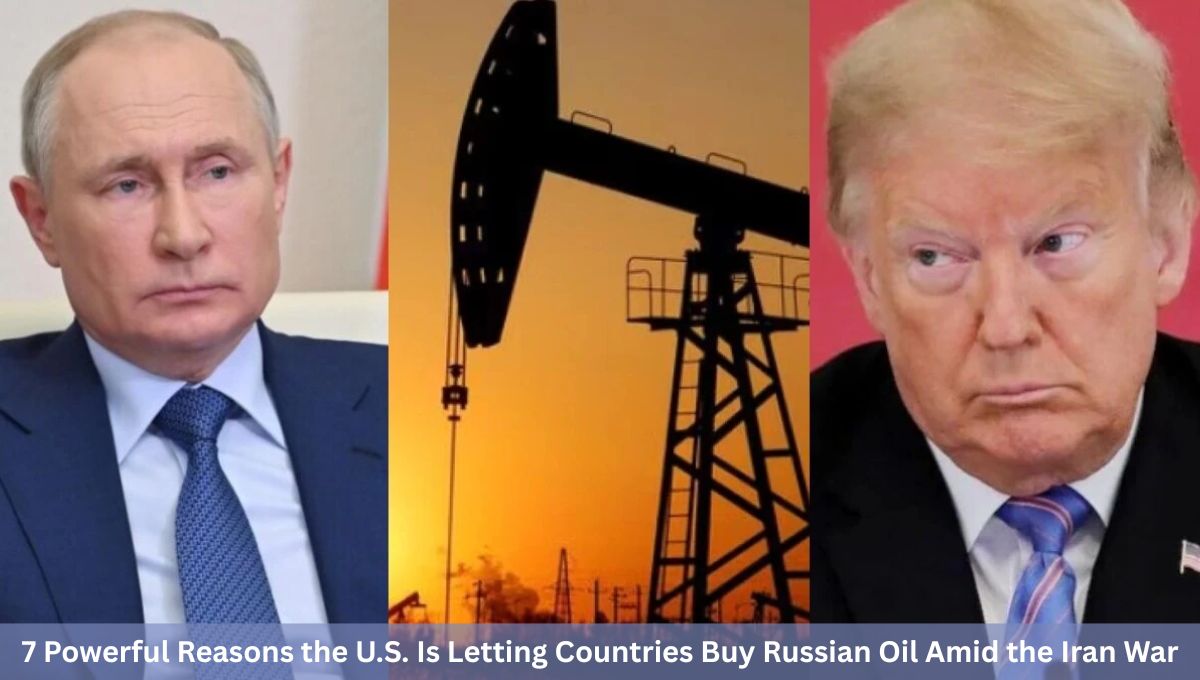
7 Powerful Reasons the U.S. Is Letting Countries Buy Russian Oil Amid the Iran War and surging oil prices. The United States has announced a temporary authorization allowing countries around the world to purchase Russian oil currently stranded at sea. The decision comes amid soaring energy prices and growing concerns about disruptions to global oil supplies following the escalating war involving Iran.
Washington said the move is a short-term measure designed to stabilize global energy markets that have been shaken by geopolitical tensions and the threat of supply shocks in the Middle East. The authorization follows an earlier waiver granted specifically to India, allowing its refineries to continue buying Russian crude that had already been loaded onto tankers before sanctions restrictions intensified.
The latest announcement effectively extends similar flexibility to other countries that may wish to purchase Russian oil cargoes already in transit. The policy applies only to oil shipments that were loaded before the specified cut-off date and are currently stranded due to sanctions or market disruptions.
U.S. officials emphasized that the measure is narrowly tailored and temporary, with the goal of preventing further spikes in oil prices rather than providing long-term economic relief to Moscow.
7 Powerful Reasons the U.S. Is Letting Countries Buy Russian Oil Amid the Iran War
Why the United States Made This Decision
The policy shift reflects the complex balance between geopolitical strategy and economic realities.
While the United States and its allies have imposed sweeping sanctions on Russian energy exports since the start of the Ukraine conflict in 2022, the current Middle East crisis has created a new challenge.
Global oil markets have become increasingly volatile as military tensions intensify around the Persian Gulf.
One of the most critical chokepoints for global energy supplies, the Strait of Hormuz, has been severely disrupted due to the ongoing conflict involving Iran and the United States.
Shipping disruptions in the region have led to fears of a major supply shortage. With millions of barrels of oil unable to move through traditional routes, prices have surged sharply in recent weeks.
Allowing countries to purchase Russian oil already at sea is therefore viewed as a way to increase available supply without reversing broader sanctions policies.
A Similar Waiver Was First Granted to India
Earlier in March, the United States granted a temporary 30-day waiver allowing India to buy Russian oil cargoes that had already been loaded onto ships.
India has emerged as one of the largest buyers of Russian crude since Western sanctions began targeting Moscow’s energy sector.
New Delhi has consistently argued that its oil purchases are driven by national energy security needs rather than geopolitical considerations.
The waiver was intended to prevent sudden disruptions to India’s energy supply while also easing pressure on global oil markets.
With oil prices rising rapidly due to Middle East tensions, the U.S. administration decided to extend a similar opportunity to other countries.
This approach allows existing supplies of Russian oil to reach the market without significantly benefiting the Russian government financially.
Oil Stranded at Sea: A Growing Problem
The concept of oil being “stranded at sea” has become increasingly common in recent years due to sanctions and regulatory restrictions.
When sanctions prevent buyers from taking delivery of oil cargoes, tankers can remain floating offshore for extended periods while traders search for alternative buyers or wait for regulatory clarity.
In the current situation, a large volume of Russian crude had already been loaded onto vessels before sanctions rules tightened.
Because the oil was already in transit, these shipments became stuck in a legal and logistical gray area.
The U.S. Treasury’s temporary authorization allows those cargoes to be sold and delivered rather than remaining unused in floating storage.
Analysts estimate that millions of barrels of Russian oil are currently at sea awaiting buyers.
Global Oil Prices Surge Above $100
Energy markets have reacted strongly to the escalating geopolitical crisis in the Middle East.
Benchmark Brent crude recently crossed the $100 per barrel mark for the first time since 2022, reflecting fears that a prolonged conflict could disrupt global supply chains.
The surge in prices has been driven by several factors:
- Military conflict involving Iran
- Threats to shipping routes in the Persian Gulf
- Reduced tanker traffic through the Strait of Hormuz
- Market speculation about long-term supply shortages
These developments have created what many analysts describe as the most significant energy market shock in years.
By allowing additional oil supplies to enter the market, the U.S. hopes to ease price pressures and prevent further economic damage.
The Strategic Importance of the Strait of Hormuz
The Strait of Hormuz is one of the most critical maritime routes in the global energy system.
Roughly one-fifth of the world’s oil supply passes through this narrow waterway connecting the Persian Gulf to international markets.
Any disruption in the strait can have immediate and dramatic consequences for global energy prices. Iran has repeatedly threatened to block the strait in response to military pressure.
Recent attacks on shipping vessels and tanker routes have heightened fears that the waterway could become inaccessible.
Such a scenario would significantly reduce global oil supply and trigger massive price spikes.
The current U.S. decision to allow Russian oil sales is partly aimed at compensating for potential losses from Middle Eastern producers.
Emergency Oil Releases from Strategic Reserves
In addition to the waiver allowing Russian oil purchases, the United States has taken other steps to stabilize energy markets.
One major move involves releasing large volumes of oil from the U.S. Strategic Petroleum Reserve.
The Department of Energy has announced plans to release more than 170 million barrels of oil to help offset supply disruptions.
At the same time, the International Energy Agency has coordinated a broader global effort involving multiple countries to release oil from their strategic reserves.
Together, these actions could inject hundreds of millions of barrels of crude into the market.
The goal is to ensure that the global economy continues to receive adequate energy supplies despite geopolitical tensions.
Russia Emerges as an Unexpected Economic Beneficiary
Ironically, some analysts believe that Russia may indirectly benefit from the ongoing crisis.
Higher global oil prices increase revenue for major energy exporters, including Moscow. Even without selling additional oil, Russia earns more money when prices rise significantly.
Some estimates suggest that Russia has already gained billions of dollars in extra revenue due to the surge in oil prices since the start of the Middle East conflict.
This dynamic highlights the complicated relationship between geopolitics and energy markets.
While Western sanctions were designed to reduce Russia’s economic influence, global supply disruptions can sometimes produce unintended consequences.
The Role of “Shadow Fleet” Oil Tankers
Another notable feature of the global oil trade in recent years is the emergence of so-called “shadow fleets.”
These are tankers that operate outside traditional regulatory frameworks, often transporting sanctioned oil cargoes.
Such vessels frequently use complex ownership structures, flags of convenience, and ship-to-ship transfers to move oil around the world.
Reports suggest that several tankers carrying Russian crude have recently altered their routes toward India after the U.S. waiver announcement.
Tracking data from maritime analytics firms indicates that multiple vessels previously headed for East Asia have changed course to deliver cargoes to Indian ports instead.
This shift illustrates how quickly global oil trade patterns can adapt to regulatory changes.
India’s Strategic Energy Calculations
India’s role in the global oil market has grown significantly over the past decade.
As one of the world’s fastest-growing major economies, the country requires enormous quantities of energy to support industrial production, transportation, and urban development.
Russian crude became particularly attractive to Indian refiners after sanctions caused Moscow to offer steep discounts.
By purchasing discounted Russian oil, India has been able to reduce its energy import costs while maintaining stable fuel supplies.
Indian officials have consistently emphasized that their energy policy prioritizes affordability and national interest.
The U.S. Balances Sanctions and Market Stability
The temporary waiver illustrates the delicate balancing act facing U.S. policymakers. On one hand, Washington wants to maintain pressure on Russia through economic sanctions.
On the other hand, removing too much oil from the global market could trigger severe economic consequences for countries around the world.
High energy prices can fuel inflation, disrupt economic growth, and create political pressure in many countries.
Allowing limited sales of Russian oil that is already at sea provides a compromise solution. The measure increases supply without encouraging new production or long-term trade with Russia.
Iran’s Threats Escalate Energy Market Anxiety
Adding to the tension, Iranian officials have issued strong warnings about potential retaliation against energy infrastructure.
Military spokespeople have warned that attacks on Iranian energy facilities could lead to regional escalation affecting oil and gas production across the Middle East.
Some Iranian statements have even suggested the possibility of targeting oil infrastructure throughout the region if hostilities continue.
These warnings have heightened fears among investors and traders that the conflict could expand into a broader regional crisis.
As a result, energy markets remain extremely sensitive to political developments.
Shipping Disruptions Across the Gulf
The war has already begun to disrupt maritime traffic in the Persian Gulf. Several shipping companies have reportedly reduced operations in the region due to security concerns.
Insurance premiums for vessels passing through the Strait of Hormuz have also increased dramatically.
These rising costs add another layer of pressure to global energy markets, making oil transportation more expensive and complicated.
Some Gulf countries are attempting to bypass the strait by using alternative pipeline routes that transport crude directly to ports on the Red Sea.
However, these routes cannot fully replace the massive volume of oil that normally passes through Hormuz.
Oil Market Volatility and Investor Reactions
Financial markets around the world have reacted nervously to the escalating geopolitical crisis.
Stock markets have shown increased volatility as investors assess the potential economic consequences of prolonged conflict.
Energy stocks, however, have often moved higher as rising oil prices boost profits for major oil companies.
Commodity traders are closely monitoring developments in the Middle East, as even minor disruptions can significantly influence prices.
The current situation demonstrates how geopolitical events can quickly reshape global financial markets.
How Long the Waiver Will Last
According to U.S. officials, the authorization allowing countries to buy Russian oil is strictly temporary.
The license will remain valid for approximately 30 days, after which the policy may be reassessed depending on market conditions and geopolitical developments.
Authorities have made clear that the waiver only applies to oil that was already loaded onto vessels before the specified deadline.
New shipments of Russian oil will still face the same sanctions restrictions that were previously in place.
This limitation is intended to prevent the measure from undermining the broader sanctions framework.
What This Means for the Global Economy
The decision to temporarily allow Russian oil purchases could have significant implications for the global economy.
By increasing available supply, the measure may help prevent oil prices from rising to extremely damaging levels.
Lower energy costs could reduce inflationary pressure in many countries, helping stabilize economic growth. However, the broader geopolitical situation remains uncertain.
If the conflict in the Middle East intensifies or if shipping disruptions worsen, oil markets could still experience further shocks.
The Uncertain Road Ahead
The global energy system is entering one of its most uncertain periods in recent years.
Multiple geopolitical crises are intersecting simultaneously, including tensions in Eastern Europe, conflicts in the Middle East, and growing competition among major global powers.
Energy markets are particularly vulnerable to such instability because supply chains depend on complex international networks of production, shipping, and trade.
For now, the U.S. decision to allow the sale of Russian oil stranded at sea offers temporary relief.
But the long-term stability of global energy markets will depend on how the geopolitical landscape evolves in the coming months.
Conclusion
The United States’ decision to allow countries to purchase Russian oil currently stranded at sea highlights the difficult trade-offs facing policymakers during times of geopolitical crisis.
While sanctions against Russia remain in place, the urgent need to stabilize global energy markets has prompted a short-term policy adjustment.
With oil prices climbing above $100 per barrel and tensions escalating around the Strait of Hormuz, ensuring adequate supply has become a priority for governments worldwide.
Whether this temporary measure succeeds in calming energy markets will depend largely on how the Iran conflict develops and whether global shipping routes remain open.
For now, the world’s energy markets remain on edge as geopolitical tensions continue to shape the future of oil supply and global economic stability.
Also Read: 500% tariffs ahead for India? Trump’s lined up a big bad Bill for countries buying Russian oil
Related Posts:
- 9 Strategic Reasons the US Allowed India to Buy…
- US Revokes Sanctions Waiver for Iran’s Chabahar…
- 3 Explosive Conditions Iran Sets to End War with US…

- 7 Powerful Measures: Trump Sanctions Russian Oil…

- 10 Powerful Revelations from the Trump–Putin Call on…

- In 8 Moves, EU Targets China-Linked Refineries and…
