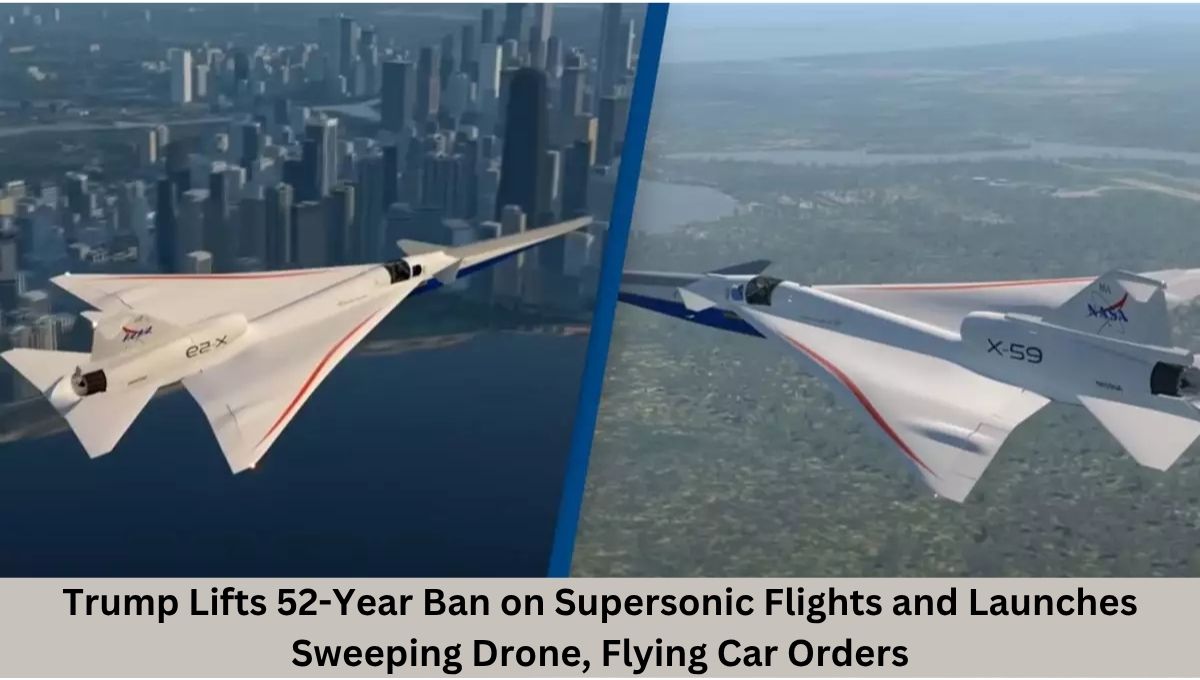
A new era in aviation unfolds as Trump Lifts 52-Year Ban on Supersonic Flights and Launches Sweeping Drone, Flying Car Orders. In a landmark move that reshapes the future of American aviation, President Donald Trump has lifted the decades-old ban on supersonic commercial flights over U.S. land.
On June 6, 2025, Trump signed a sweeping executive order instructing the Federal Aviation Administration (FAA) to reverse the 1973 rule that prohibited civilian aircraft from flying faster than the speed of sound over land.
This historic policy shift signals a new era for high-speed aviation, especially benefitting U.S.-based Boom Supersonic and its upcoming Mach 1.7 aircraft, the Overture.
It also reflects Trump’s broader strategy to boost innovation in aerospace technology while ensuring airspace security ahead of major global events like the FIFA World Cup 2026 and 2028 Summer Olympics.
Trump Lifts 52-Year Ban on Supersonic Flights and Launches Sweeping Drone, Flying Car Orders
The End of an Era: 1973 Supersonic Ban Repealed
The original regulation, established in 1973, banned overland supersonic flight due to the disruptive sonic booms generated by aircraft. Only military jets were exempt and even they were heavily restricted. Trump’s order calls these rules “outdated and overly restrictive,” citing advancements in aerospace engineering, noise suppression, and sustainable aviation technology.
The order reads:
“For more than 50 years, outdated and overly restrictive regulations have grounded the promise of supersonic flight… Advances now make supersonic flight not just possible, but safe, sustainable, and commercially viable.” The FAA has been directed to work within current legal and financial frameworks to implement these reforms immediately. The executive order is also consistent with a recent Republican-sponsored bill that permits overland supersonic flight provided the sonic boom is inaudible to those on the ground.
Boom Supersonic Set to Benefit
Boom Supersonic, based in Colorado, stands to gain the most from this decision. The company’s Overture jet designed to fly at Mach 1.7 and carry 64 to 80 passengers in an all-business-class configuration was previously limited by the need to reroute over oceans to avoid land-based sonic boom regulations.
Now, with these regulatory barriers lifted, Boom can plan coast-to-coast routes such as New York to Los Angeles or San Francisco to Washington, D.C., significantly cutting travel time.
Still, challenges remain:
- Financial: The cost of development, manufacturing, and FAA certification runs into billions.
- Technical: Noise reduction, sustainable fuels, and engine design still need refinement.
Commercial: Airlines must weigh the benefits of supersonic speed against high operating costs and uncertain ticket pricing.
Flying Cars and eVTOLs Take Off
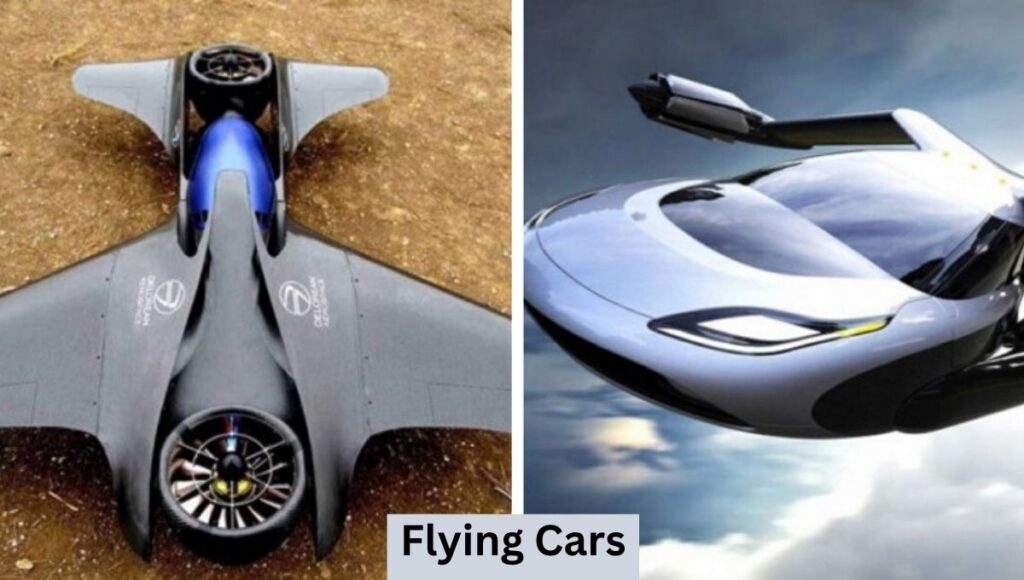
Alongside the supersonic order, President Trump signed additional executive directives to boost flying car technology specifically electric vertical takeoff and landing (eVTOL) aircraft. The FAA has been tasked with launching a pilot program to allow companies like Joby Aviation to test flying taxis across U.S. cities in partnership with state and local governments.
These aircraft, often referred to as “flying cars,” are expected to play a key role in urban air mobility, offering fast transport for emergency medical services, air taxis, and cargo.
The Trump administration says the program is modeled on a successful 2017 initiative and hopes to see public-private partnerships roll out by the end of 2025.
Drone Security Tightened Ahead of 2026 World Cup
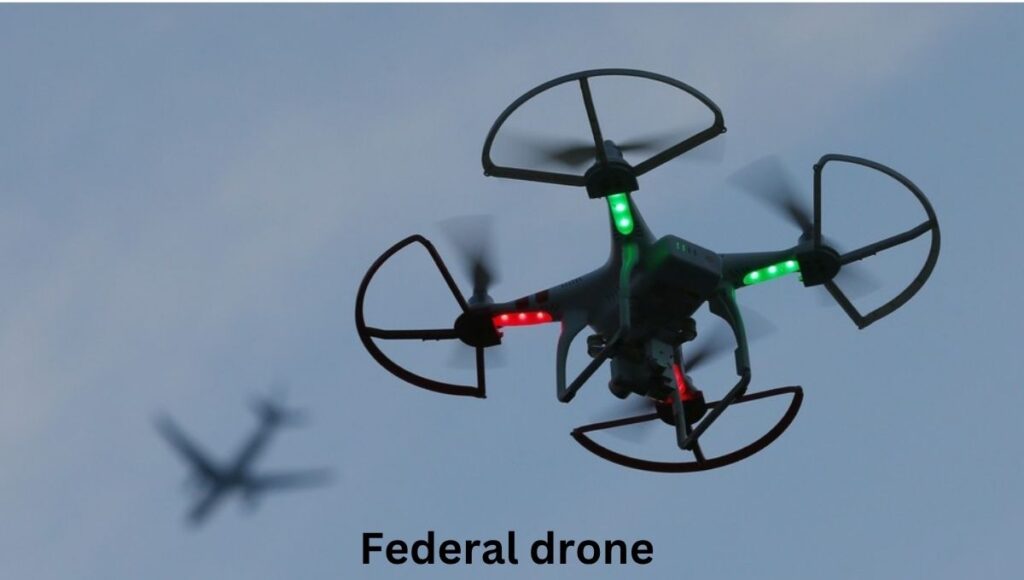
To counter potential threats from rogue drones, another executive order focuses on airspace security, especially as the United States prepares to host the 2026 FIFA World Cup and 2028 Olympics.
The order establishes a federal drone task force to:
- Detect and identify rogue drones in real time.
- Protect sensitive locations such as airports, amusement parks, chemical plants, and stadiums.
- Train local and federal law enforcement in drone threat mitigation.
White House officials stressed the urgency of the matter, referencing increased drone sightings in New Jersey and Ukraine’s use of drones in warfare. They also cited national security concerns tied to Chinese drone manufacturers like DJI and Autel Robotics.
The directive promotes domestic drone manufacturing and reduces U.S. reliance on foreign drone technology. It also directs the Commerce Department to investigate foreign drone suppliers that may pose a risk to U.S. national security.
Streamlining Commercial Drone Operations
Another key element of Trump’s aviation push is expanding commercial drone use. The executive order instructs the FAA to expedite rules that would allow drones to fly beyond visual line of sight (BVLOS) without special waivers.
This is crucial for industries like:
- Retail delivery (e.g., Amazon)
- Medical supply transport
- Agriculture monitoring
- Disaster relief
The FAA will also create a noise certification standard and fast-track approval of new drone operations to support emerging businesses.
A Vision for American Aerospace Dominance
Trump’s triple executive order strategy lifting the supersonic flight ban, enhancing drone security, and promoting flying cars is a bold move to reestablish U.S. leadership in aviation technology.
“The reality is that Americans should be able to fly from New York to L.A. in under four hours,” said Michael Kratsios, White House tech policy chief. “With modern innovations in materials and engineering, this vision is no longer futuristic it’s feasible.”
Industry leaders have praised the orders, including Michael Robbins, CEO of the Association for Uncrewed Vehicle Systems International (AUVSI), who stated: “These actions show that drones and advanced aviation technology are critical to American economic strength, national security, and global leadership.”
Conclusion: A Turning Point in U.S. Air Travel
With these sweeping aviation reforms, the Trump administration is betting big on high-speed, high-tech transportation. From Boom Supersonic’s Overture jet to flying taxis and drone delivery systems, the president’s executive orders mark a strategic pivot toward futuristic travel that was once confined to science fiction.
However, whether these bold ideas will take off depends on continued investment, technological breakthroughs, and responsible regulation. As the U.S. prepares to showcase itself on the world stage during the 2026 FIFA World Cup and the 2028 Olympics, airspace innovation may very well be America’s next frontier.
Also Reead: Trump’s Controversial Travel Ban Takes Effect, Targeting 12 Nations Amid Global Backlash