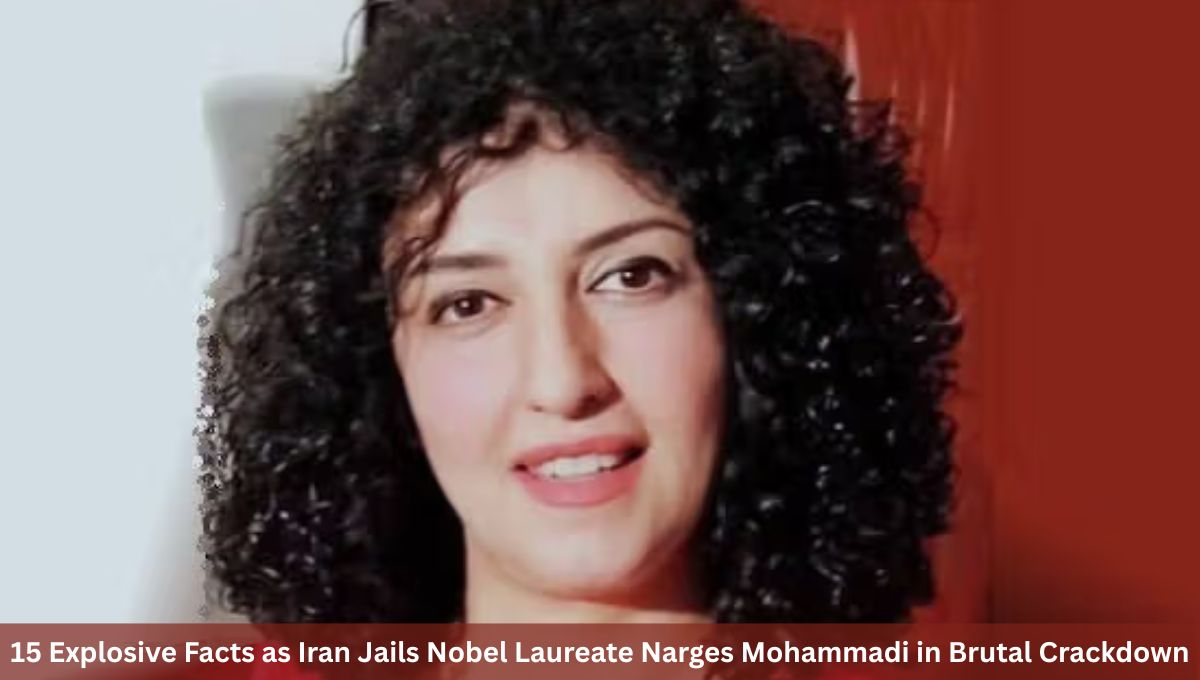
15 Explosive Facts as Iran Jails Nobel Laureate Narges Mohammadi in Brutal Crackdown, deepening global human rights concerns. An Iranian court has sentenced Nobel Peace Prize laureate and prominent human rights activist Narges Mohammadi to more than seven additional years in prison, her lawyer and supporters confirmed, marking one of the most severe punishments handed down to a globally recognized dissident in recent years.
The ruling, issued by a Revolutionary Court in Mashhad, includes six years for “gathering and collusion to commit crimes,” one-and-a-half years for propaganda activities, a two-year travel ban, and two years of internal exile to the remote city of Khosf in eastern Iran.
Under Iranian law, the sentences will run concurrently, but the cumulative impact further extends what rights groups describe as decades of judicial persecution against one of Iran’s most outspoken critics.
15 Explosive Facts as Iran Jails Nobel Laureate Narges Mohammadi in Brutal Crackdown
Who Is Narges Mohammadi?
Narges Mohammadi, 53, is among Iran’s most prominent women’s rights and human rights activists and the 2023 Nobel Peace Prize laureate.
She serves as vice president of the Defenders of Human Rights Center (DHRC), founded by fellow Nobel laureate Shirin Ebadi, and has spent more than two decades campaigning against the death penalty, torture, and mandatory hijab laws in Iran.
Born in 1972, Mohammadi studied physics and later worked as a journalist and author. Her writings — including the book White Torture — document psychological and physical abuse inside Iranian prisons.
The Latest Sentence: What the Court Decided
According to her lawyer Mostafa Nili, the court ruled that Mohammadi:
- Six years for gathering and collusion against national security
- One and a half years for propaganda against the state
- Two-year internal exile to Khosf, South Khorasan province
- Two-year ban on leaving Iran
The verdict is not final and may be appealed. However, such appeals rarely succeed in Iran’s Revolutionary Courts, which often issue judgments with limited due process.
Health Concerns and Hunger Strike
The ruling comes amid growing alarm over Mohammadi’s deteriorating health.
Supporters say she began a hunger strike on February 2 to protest:
- Her detention conditions
- Restrictions on phone calls to family and lawyers
- Prolonged isolation
She reportedly ended the hunger strike after sentencing due to worsening physical condition.
Mohammadi has previously suffered multiple heart attacks while imprisoned and underwent emergency surgery in 2022. In late 2024, doctors removed a bone lesion feared to be cancerous.
Her lawyer has urged authorities to grant temporary release on medical bail, warning her continued detention could be life-threatening.
A Life Spent Behind Bars
Mohammadi’s prison history spans more than 15 years:
Key Arrests and Convictions
- 2009–2010: Passport confiscated; arrested and released on bail
- 2011: Convicted of acting against national security; sentenced to prison
- 2012: Briefly jailed, then released for medical reasons
- 2015: Sentenced to 16 years after speaking out on prison conditions
- 2022: Received eight years and 70 lashes while already incarcerated
- 2024: Granted temporary medical furlough
- December 2025: Rearrested in Mashhad
According to the Narges Foundation, cumulative sentences against her now total up to 44 years in prison.
Arrest at a Memorial Ceremony
Mohammadi was arrested in December while attending a memorial ceremony in Mashhad for Khosrow Alikordi, a human rights lawyer whose death activists have described as suspicious.
Prosecutors accused her of:
- Chanting “norm-breaking slogans”
- Encouraging unrest
- Disturbing public order
Footage from the event shows Mohammadi demanding justice for Alikordi and other detainees.
Why This Case Matters Globally
Mohammadi’s imprisonment has become a symbol of Iran’s wider crackdown on dissent, particularly against women.
She strongly supported the “Woman, Life, Freedom” protests sparked by the 2022 death of Mahsa Amini in morality police custody — demonstrations that marked one of the most significant challenges to Iran’s leadership in decades.
Human rights groups estimate tens of thousands were detained during protest crackdowns, with hundreds killed.
Iran’s Message: Zero Tolerance for Dissent
Iranian officials have increasingly signaled a hardline stance.
Judiciary chief Gholamhossein Mohseni-Ejei warned critics that harsh punishment awaited those who questioned the system.
“Those who once stood with the revolution and now speak against it will face damage,” he said.
Revolutionary Courts — where Mohammadi was sentenced — are widely criticized for closed hearings, limited defense access, and politically motivated verdicts.
The Nobel Peace Prize — Awarded Behind Bars
Mohammadi was awarded the Nobel Peace Prize in 2023 for her fight against oppression and violence toward women in Iran.
Because she was imprisoned, her twin children, who live in Paris, accepted the award on her behalf.
She has not seen them since 2015.
The Nobel Committee called her a symbol of resistance, praising her courage even while incarcerated.
Iran and the Death Penalty
Mohammadi has been a leading voice against capital punishment in Iran.
Human rights organizations say Iran carries out more executions annually than any country except China, where figures remain opaque.
Her activism against executions has repeatedly placed her at odds with authorities.
Timing: Sentence Amid Nuclear Negotiations
The ruling comes as Iran negotiates indirectly with the United States over its nuclear program, attempting to avert further military escalation following a 12-day Iran–Israel war.
While Iranian President Masoud Pezeshkian described recent talks in Oman as “a step forward,” Foreign Minister Abbas Araghchi struck a defiant tone.
“Our atomic bomb is the power to say no to the great powers,” Araghchi said, using stark rhetoric amid mounting pressure.
US Military Pressure and Regional Tensions
As talks continue, the US has deployed significant military assets to the Middle East, including:
- Aircraft carrier USS Abraham Lincoln
- Warplanes and naval escorts
Officials say the deployment is meant to deter escalation while negotiations continue.
Israeli Prime Minister Benjamin Netanyahu is expected to visit Washington this week, with Iran likely topping the agenda.
Family and Foundation Raise Alarm
Mohammadi’s family and foundation have warned that her detention violates international human rights standards.
Her son said the situation in Iran amounts to “a crime against humanity.”
Her husband, Taghi Rahmani, said officials attempted to control what she could say during phone calls.
“The Narges we know refuses silence,” he said.
Why Iran Targets Prominent Women Activists
Analysts say Mohammadi’s case reflects Iran’s fear of symbolic figures who inspire public resistance.
Women activists, particularly those challenging hijab laws and state violence, have emerged as central figures in dissent movements — making them high-priority targets.
International Reaction and Silence from Tehran
Iran has not officially acknowledged the sentence.
Amnesty International, Human Rights Watch, and other groups have repeatedly condemned her detention, calling for her immediate release.
Western governments have expressed concern, but concrete diplomatic consequences remain limited.
What Happens Next?
- The verdict can be appealed
- Temporary medical release remains possible
- International pressure may intensify
- Mohammadi’s health remains fragile
For now, she remains detained in Mashhad, isolated from family and lawyers.
A Defining Case for Iran’s Future
Narges Mohammadi’s sentencing is more than a legal ruling — it is a statement of intent by Iranian authorities.
At a time when Iran seeks diplomatic engagement abroad, the continued imprisonment of a Nobel Peace Prize laureate underscores the deep contradictions at the heart of the Islamic Republic’s governance.
For many Iranians and observers worldwide, her case has become a defining measure of whether justice, reform, and human dignity can exist under the current system.
Bottom Line:
Iran’s decision to sentence Nobel laureate Narges Mohammadi to years behind bars has reignited global concern over political repression, women’s rights, and freedom of expression.
As nuclear talks continue and regional tensions rise, her fate stands as a stark reminder that peace abroad does not necessarily mean justice at home.
Also Read: 9 Explosive Signals as Trump and Khamenei Edge Iran–US Toward War or Deal
Also Read: Why has Iran extended Nobel laureate Narges Mohammadi’s jail term by more than seven years?
Related Posts:
- Dramatic Moments Behind Trump’s Gaza Peace Push and…

- 7 Shocking Reasons FIFA’s Peace Prize for Trump…

- Trump’s 2025 Nobel Peace Prize Snub: Politics Over…

- Chemistry Nobel Prize 2025: Groundbreaking Discoveries

- Trump’s Nobel Peace Prize Bid: Gaza Peace Plan, 8…

- 7 Alarming Impacts of Trump’s Plan to Expand the US…