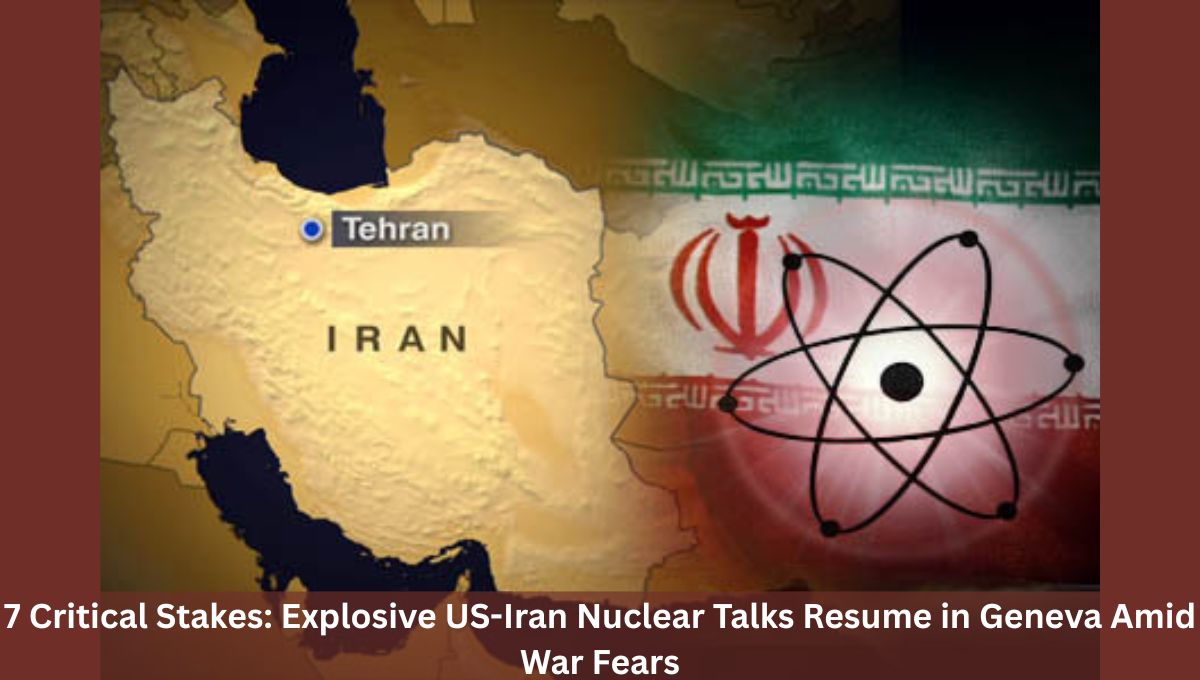
7 Critical Stakes: Explosive US-Iran Nuclear Talks Resume in Geneva Amid War Fears as deal is said to be within reach. The fragile balance between diplomacy and war has once again tilted toward uncertainty as Iran and the United States resume nuclear negotiations in Geneva.
Against a backdrop of military deployments, escalating sanctions, and blunt warnings from Washington, the talks represent one of the most consequential diplomatic moments in the Middle East in years.
An Iranian delegation led by Foreign Minister Abbas Araghchi arrived in Geneva amid renewed pressure from US President Donald Trump, who has warned of severe consequences if Tehran fails to curb its nuclear programme.
While both sides publicly express hope for diplomacy, the scale of military preparations and political rhetoric suggests the stakes have rarely been higher.
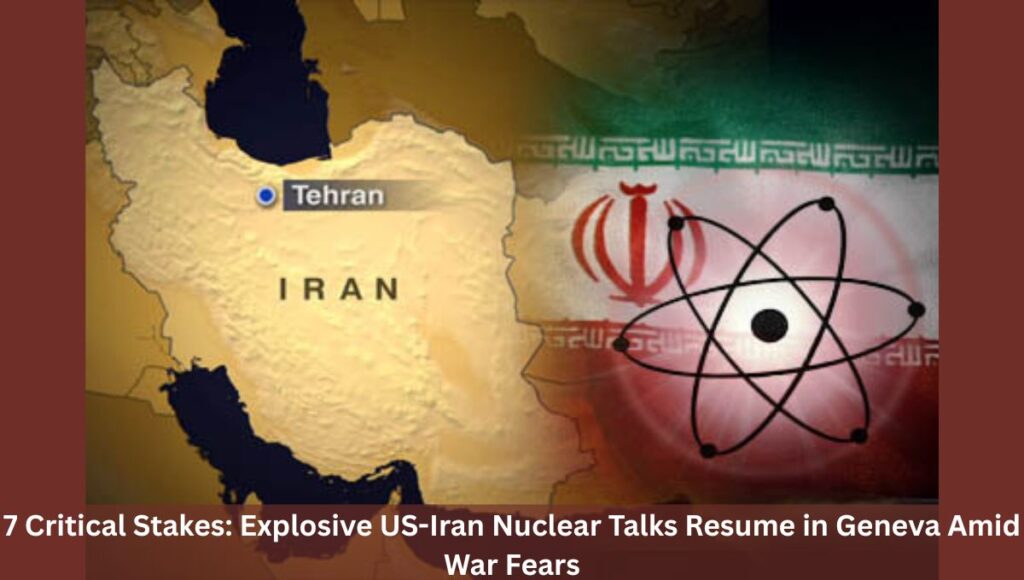
7 Critical Stakes: Explosive US-Iran Nuclear Talks Resume in Geneva Amid War Fears
1. Why These Geneva Talks Matter More Than Ever
A Region on the Brink
The resumption of talks comes after a year marked by unprecedented military escalation.
Following a brief but intense conflict involving Iran, Israel, and the United States, fears of a wider regional war have become more tangible.
The US has deployed two aircraft carrier strike groups, strategic bombers, and advanced air defense systems across the Gulf and surrounding regions.
Iran, in response, has conducted naval drills near the Strait of Hormuz — a chokepoint through which nearly one-fifth of the world’s oil supply passes.
Diplomacy in Geneva is therefore not just about uranium enrichment; it is about averting a regional conflagration that could disrupt global energy markets and international security.
2. Iran’s Position: Optimism Framed by Economic Pain
Iranian President Masoud Pezeshkian struck a cautiously optimistic tone ahead of the talks, saying he held a “favourable outlook” for negotiations conducted under the guidance of Supreme Leader Ali Khamenei.
Key Iranian Demands
Iranian negotiators are reportedly focused on three central objectives:
- Recognition of Iran’s right to peaceful nuclear enrichment
- Gradual but irreversible lifting of US sanctions
- Guarantees against future unilateral withdrawal by Washington
Iran insists its nuclear programme is civilian, rejecting Western accusations that it seeks nuclear weapons.
Officials argue that decades of sanctions have devastated ordinary Iranians without delivering security or stability.
“We are trying to move beyond a situation of neither war nor peace,” Pezeshkian said, echoing a sentiment shared by many Iranians weary of economic hardship.
3. Washington’s Strategy: Diplomacy Backed by Maximum Pressure
Trump’s Dual-Track Approach
President Trump has framed the negotiations as a last opportunity for Iran to avoid military confrontation.
In his recent State of the Union address, he accused Tehran of pursuing “sinister nuclear ambitions” while reiterating that he would never allow Iran to acquire a nuclear weapon.
US Vice President JD Vance reinforced this message, warning that Washington has “a number of tools” beyond diplomacy.
Sanctions Escalate Ahead of Talks
Just hours before negotiations resumed, the US Treasury announced fresh sanctions targeting:
- Iranian petroleum sales
- Shipping networks
- Individuals linked to weapons production
Treasury Secretary Scott Bessent described the move as part of a broader “maximum pressure” campaign designed to force Iran into meaningful concessions.
4. The Role of Mediators and International Watchdogs
Oman’s Quiet Diplomacy
The talks are being mediated by Oman’s foreign minister Badr Albusaidi, reflecting Muscat’s long-standing role as a trusted intermediary between Tehran and Washington.
Indirect diplomacy — with messages passed through intermediaries — has become the preferred format due to deep mistrust between the two sides.
IAEA Oversight
Also present in Geneva is Rafael Grossi, head of the International Atomic Energy Agency.
His involvement is seen as critical in assessing whether any proposed inspection regime would be sufficient to verify Iran’s commitments.
5. A Deal Shaped by History: The Shadow of 2015
The talks inevitably recall the landmark 2015 nuclear agreement, formally known as the Joint Comprehensive Plan of Action (JCPOA), negotiated under former US President Barack Obama.
Trump’s withdrawal from that deal during his first term fundamentally altered US-Iran relations and hardened skepticism in Tehran about American guarantees.
Iranian officials now insist that any new agreement must be structured in a way that allows Trump to present it domestically as “better” than the 2015 deal — a political necessity Washington appears to acknowledge.
6. Global Implications: Oil, Markets, and Security
Energy Markets on Edge
Global oil prices have climbed toward seven-month highs as traders weigh the risk of conflict disrupting supplies from the Middle East.
Iran, a key OPEC producer, remains central to global energy stability.
Saudi Arabia, according to sources, has prepared contingency plans to increase production if Iranian exports are disrupted.
Why the World Is Watching
For Europe, Asia, and emerging economies, the talks are about more than nuclear policy:
- Higher oil prices threaten inflation
- Supply chain disruptions risk slowing global growth
- Military conflict could trigger refugee flows and regional instability
As a result, governments from Beijing to Brussels are closely monitoring developments in Geneva.
7. Inside Iran: Public Fear, Defiance, and Fatigue
On the streets of Tehran, opinions are divided. Some residents believe conflict is inevitable, while others view Washington’s threats as bluff.
A shopkeeper interviewed by local media said, “The Americans want concessions, not war.”
Others fear that even limited strikes could spiral into a prolonged confrontation with devastating consequences.
Years of sanctions, inflation, and political unrest have left Iranian society deeply strained. Many see diplomacy as the only viable path forward.
Expert Analysis: Has Trump Cornered Himself?
According to International Institute for Strategic Studies analyst Emile Hokayem, the scale of US military deployment creates political risk for Washington.
“If the US pulls back without an agreement, it could damage the president’s credibility,” he warned.
This dynamic increases pressure on both sides to produce at least the framework of a deal — even if key disputes remain unresolved.
What Happens If Talks Fail?
The consequences of failure are stark:
- Potential US or Israeli strikes on Iranian facilities
- Iranian retaliation against US bases and allies
- Disruption of global oil shipping through the Strait of Hormuz
- Escalation into a multi-front regional war
Both sides publicly prefer diplomacy, but neither has ruled out military options.
Conclusion: A Narrow Window for Diplomacy
As negotiators meet behind closed doors in Geneva, the world faces a familiar yet perilous question:
can diplomacy still prevail when trust is exhausted and weapons are already in place?
Iran insists a deal is “within reach.” Washington says time is running out. Between those positions lies a narrow corridor where compromise, verification, and political will must align.
What happens in Geneva will not only shape US-Iran relations — it may determine whether the Middle East steps back from the brink or tumbles once more into conflict.
Also Read: 7 Explosive Signals as Iran Partially Shuts the Strait of Hormuz During U.S. Nuclear Talks
Also Read: Iran promises flexibility at nuclear talks amid threat of US strikes