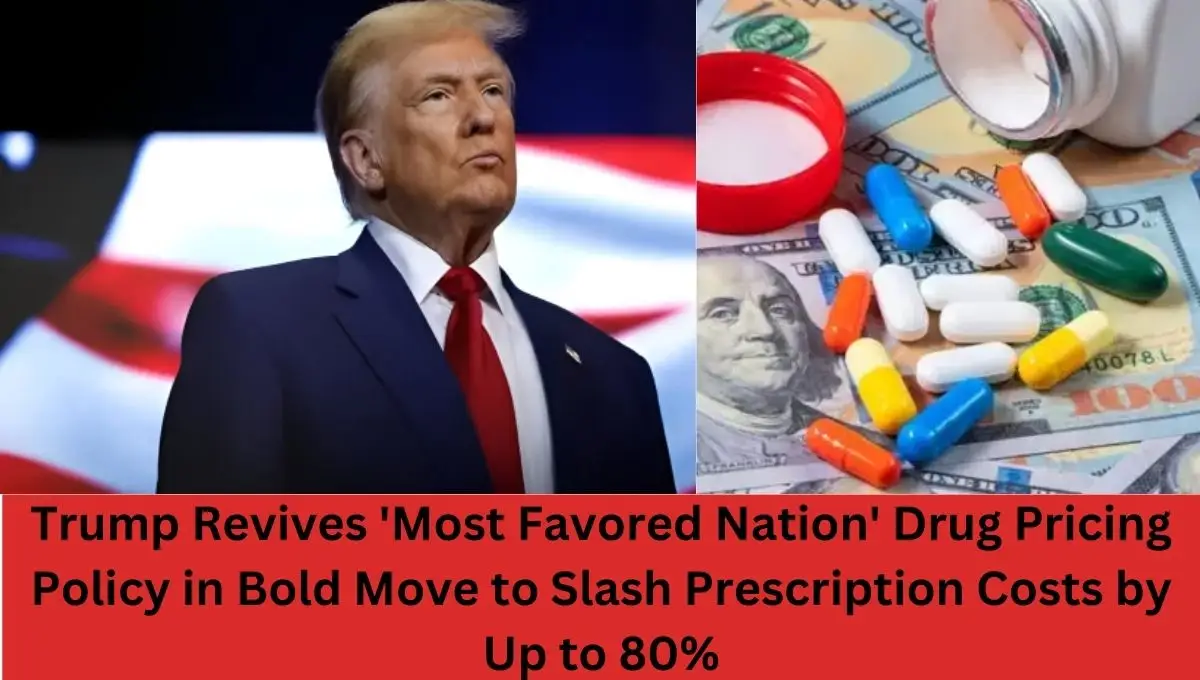
In a remarkable executive order, Trump Revives ‘Most Favoured Nation’ Drug Pricing Policy in Bold Move to Slash Prescription Costs by Up to 80%. On Sunday, former President Donald Trump announced a dramatic move to cut prescription drug prices in the U.S. by reviving his controversial ‘Most Favored Nation’ drug pricing policy. The new executive order is expected to be signed on Monday morning.
Trump Revives ‘Most Favored Nation’ Drug Pricing Policy in Bold Move to Slash Prescription Costs by Up to 80%
Trump Announces Executive Order to Slash Drug Prices by 30% to 80%
The order is designed to align the price Americans pay for certain medications with the lowest prices paid by other developed nations, potentially slashing costs by 30% to 80%. In a post on his Truth Social platform, Trump wrote, “Our Country will finally be treated fairly, and our citizens Healthcare Costs will be reduced by numbers never even thought of before.” He called it one of the most consequential executive orders in U.S. history.
What Is the ‘Most Favored Nation’ Drug Pricing Policy?
Trump’s Most Favored Nation (MFN) policy was first introduced in 2020 and aimed to tie Medicare payments for specific prescription drugs to the lowest price available in peer countries, such as Canada, Germany, and the United Kingdom.
These countries often pay significantly less for the same drugs, despite them being manufactured by the same companies in the same facilities.
Under the revived plan, the Department of Health and Human Services would be directed to ensure Medicare pays no more than the lowest price found in comparable countries, adjusting for economic factors like GDP and purchasing power.
Why Are Drug Prices So High in the U.S.?
According to Trump, Americans have long been overcharged by pharmaceutical companies, often paying five to ten times more than patients in other countries. He criticized these firms for blaming the high prices on research and development costs, accusing them of exploiting American consumers.
“The Pharmaceutical/Drug Companies would say, for years, that it was Research and Development Costs, and that all of these costs were… borne by the ‘suckers’ of America, ALONE,” Trump said. He also claimed the executive order will bring “FAIRNESS TO AMERICA” by equalizing global drug pricing.
Comparison to Biden’s Medicare Drug Pricing Strategy
While Trump aims to overhaul U.S. pricing through direct comparison with foreign markets, President Joe Biden made strides in lowering drug costs through the Inflation Reduction Act of 2022.
That law enabled Medicare to negotiate prices for high-cost drugs, a first in U.S. history. So far, this policy has applied to 10 drugs in 2023, with 15 more set for negotiation in 2025.
A recent federal appeals court ruling in May 2025 upheld the legality of these negotiations, despite pushback from major drugmakers.
Potential Savings and Risks
If successfully implemented, Trump’s MFN policy could lead to billions in Medicare savings and significantly lower premiums and out-of-pocket expenses for seniors. Trump has claimed that the U.S. could save trillions of dollars over time.
However, healthcare analysts warn the policy may come with trade-offs. It could lead to reduced access to some medications if pharmaceutical companies pull drugs from the U.S. market rather than lower their prices.
Additionally, the pharma industry is expected to fiercely oppose the order, as it did in 2020 when the initial version was blocked in court.
Chris Meekins, an analyst with Raymond James, noted, “The more grandiose Trump’s proposed executive actions, the less likely they are to be implemented, as successful court challenges will be much more likely.”
Pharmaceutical Industry Pushes Back
The Pharmaceutical Research and Manufacturers of America (PhRMA) quickly condemned the renewed MFN plan. CEO Stephen Ubl called it a “Foreign First Pricing scheme”, arguing it would result in massive cuts to Medicare without ensuring better patient outcomes.
“Importing foreign prices will cut billions of dollars from Medicare with no guarantee that it helps patients or improves their access to medicines,” Ubl said.
He also warned the policy could lead to decreased pharmaceutical investment in the U.S., pushing the country to rely more heavily on foreign manufacturing, especially from China.
New Executive Order Includes Insulin and Epinephrine Price Caps
In addition to the MFN rule, Trump’s order includes new steps to reduce costs for insulin and epinephrine. For low-income or uninsured patients, insulin prices may be capped at as little as 3 cents per unit, and injectable epinephrine (for allergic reactions) may cost just $15, plus a minimal administrative fee.
Other provisions aim to standardize Medicare payments across treatment facilities and allow for the importation of lower-cost drugs from abroad to help states cut healthcare expenses.
What’s Next for Trump’s Drug Pricing Plan?
Despite the bold promises, much remains uncertain. The exact drugs covered, implementation timeline, and legal durability of the executive order are still in question.
If the policy mirrors Trump’s 2020 model, it could initially affect 50 high-cost Medicare Part B drugs, many of which are administered in doctors’ offices.
The announcement comes as Trump and Republicans seek to control healthcare spending as part of broader tax and spending reform efforts. Whether this revived Trump drug pricing policy will survive legal and legislative hurdles remains to be seen.
Still, for millions of Americans burdened by soaring drug costs, the MFN policy could signal a significant shift in how the U.S. approaches prescription drug affordability.
Final Thoughts
As the 2024 election cycle continues to heat up, Trump’s bold healthcare move could re-center the national conversation on drug pricing. Whether it results in real-world savings or stalls in the courts, the Most Favored Nation executive order is a significant gambit in the long-running battle over the cost of prescription drugs in the U.S.
Also Read: Indian drugmakers see potential tail wind in Trump’s MFN drug pricing plan