11 Explosive Revelations: How Mexico Tracked El Mencho Through His Girlfriend, leading to a deadly military raid. For years, he was a ghost—rarely photographed, perpetually mobile, protected by forests, mountains, land mines, and an army of gunmen. Nemesio Rubén Oseguera Cervantes, better known as El Mencho, had become the most feared and elusive drug lord in Mexico.
That ended not with a drone strike or a mass arrest—but with the quiet movements of a woman he trusted. Mexican authorities say surveillance of one of El Mencho’s romantic partners provided the decisive break after years of failure.
What followed was one of the most consequential security operations in modern Mexican history—an operation that killed the head of the Jalisco New Generation Cartel (CJNG) and plunged large parts of Mexico into chaos.
This is how Mexico finally found El Mencho—and why his death may reshape the country’s future.
11 Explosive Revelations: How Mexico Tracked El Mencho Through His Girlfriend
1. The Man Who Turned CJNG Into a Global Power
El Mencho rose from relative obscurity to become the architect of one of the world’s most violent criminal organizations.
Under his leadership, CJNG evolved from a regional group into a transnational drug empire, trafficking fentanyl, methamphetamine, cocaine, and heroin into the United States and beyond.
Unlike older cartels, CJNG embraced:
- Military-grade weapons
- Drone explosives
- Armored convoys
- Open warfare against the state
By the mid-2010s, El Mencho’s cartel had proven it could shoot down military helicopters, blockade entire cities, and paralyze regions within hours.
For Washington, he became one of the most wanted fugitives in the world. The US Drug Enforcement Administration placed a $15 million reward on his head.
For Mexico, he became a symbol of impunity.
2. Why El Mencho Was So Hard to Catch
El Mencho survived decades on the run because he:
- Rarely used phones
- Avoided predictable routines
- Moved through remote mountain terrain
- Relied on a tight inner circle
He operated from cabins, ranches, and forest compounds in western Mexico, particularly in Jalisco, where CJNG’s influence runs deep.
Most importantly, he trusted very few people.
That trust would ultimately undo him.
3. The Breakthrough: Following a Romantic Partner
According to Mexico’s defense ministry, investigators identified a trusted associate linked to one of El Mencho’s romantic partners.
Surveillance revealed that this woman was escorted to a rural compound near Tapalpa, a picturesque mountain town known for vacation cabins and forests.
She arrived discreetly.
She stayed the night.
Then she left.
El Mencho did not.
That single detail allowed security forces to conclude—with near certainty—that the cartel leader remained inside, heavily guarded but momentarily stationary.
After years of pursuit, authorities finally had something rare:
location certainty.
4. Intelligence Sharing: The US Role
While the operation was carried out exclusively by Mexican forces, officials confirmed that US intelligence helped verify the hideout’s coordinates.
President Claudia Sheinbaum emphasized that:
- No US troops participated
- No American forces were deployed on the ground
The role of Washington was limited to intelligence confirmation—yet it underscored the deep security cooperation between the two countries under intense political pressure from US President Donald Trump.
5. The Raid: How the Operation Unfolded
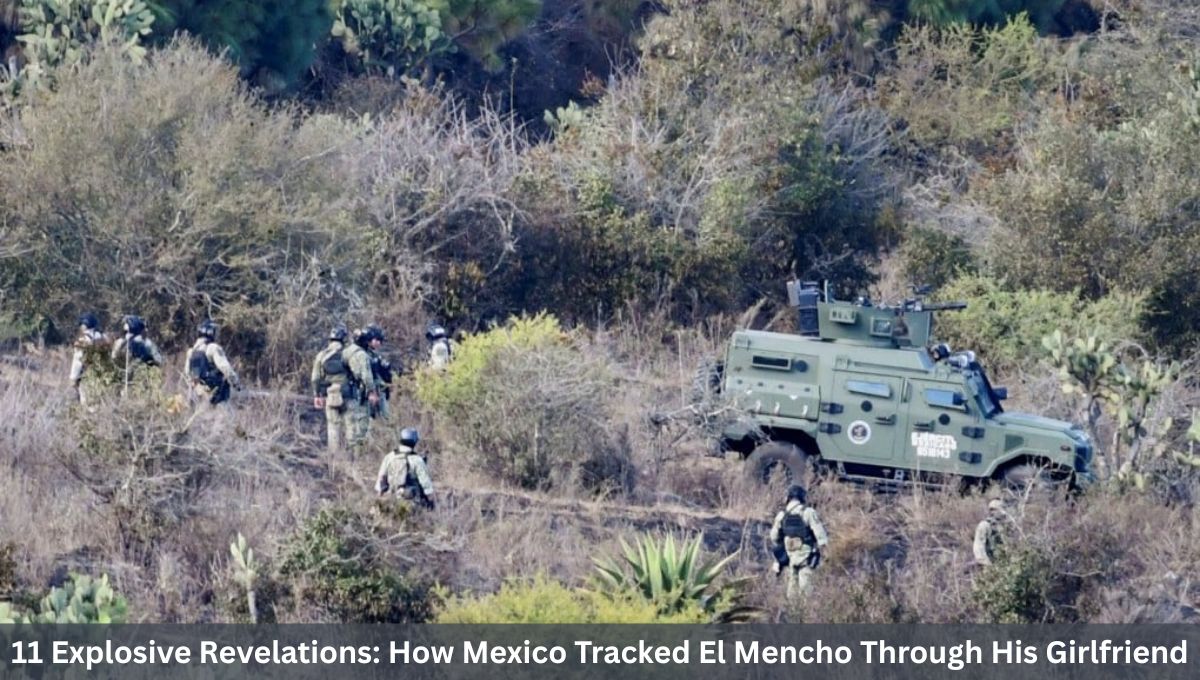
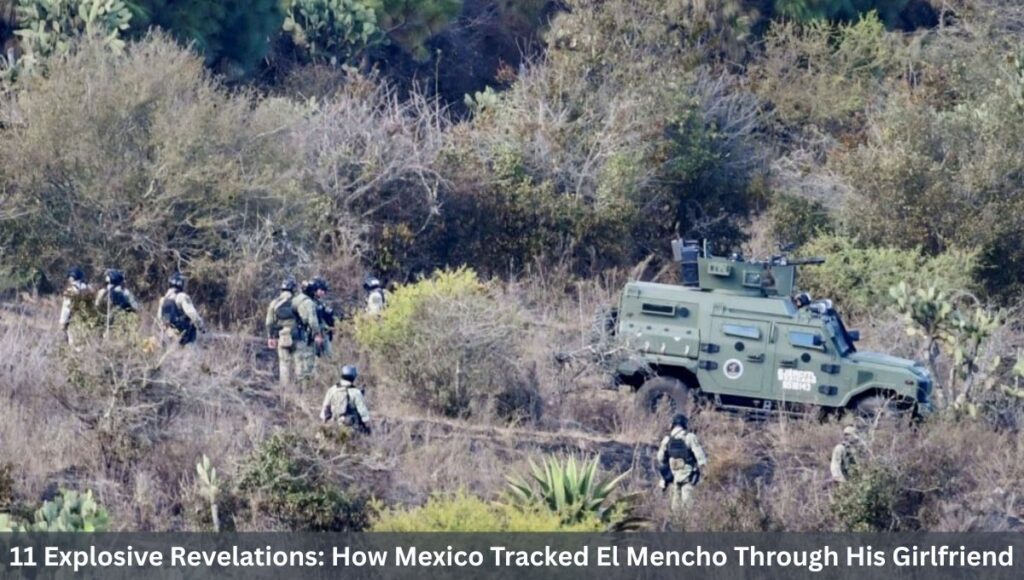
In the early hours of Sunday, Mexican special forces and National Guard units established a ground cordon around the wooded compound outside Tapalpa.
The operation included:
- Ground assault teams
- Six helicopters
- Reconnaissance aircraft from the Mexican Air Force
When troops moved in, they were met with immediate and ferocious resistance.
Gunmen loyal to El Mencho opened fire and retreated into the forest, attempting to extract their leader under cover of heavy weapons.
6. El Mencho’s Final Attempt to Escape
As the firefight intensified, El Mencho fled with two bodyguards into dense undergrowth surrounding the cabins.
Mexican special forces split into pursuit units.
After multiple shootouts:
- Eight cartel gunmen were killed
- Several soldiers were injured
- El Mencho and his two bodyguards were critically wounded
They were found hiding in forest undergrowth, exhausted and bleeding.
For the first time, El Mencho was alive—and in custody.
7. Death in the Air
Given the severity of their injuries, El Mencho and his bodyguards were loaded onto a military helicopter for emergency evacuation to a medical facility.
They never made it.
“All three died on the way,” Defense Secretary Ricardo Trevilla Trejo told reporters.
Fearing immediate retaliation in Jalisco’s major cities, authorities diverted the flight. The bodies were ultimately transferred to Mexico City under heavy security.
The kingpin was dead.
The country was about to explode.
8. Cartel Reprisals: Mexico Burns
Within hours, CJNG launched coordinated nationwide reprisals.
Across at least 20 of Mexico’s 32 states, cartel fighters:
- Erected fiery roadblocks
- Torched buses, trucks, and cars
- Attacked police stations and businesses
- Opened fire on security forces
In Guadalajara, Mexico’s second-largest city, public transport shut down. Streets emptied. Schools closed. Families sheltered in place.
The violence was not random—it was strategic.
9. The Human Cost: A Devastating Toll
Authorities say more than 70 people were killed in the operation and its aftermath, including:
- At least 25 National Guard members
- Around 30 suspected cartel fighters
- Civilians and government employees
Security Secretary Omar García Harfuch described the attacks as some of the deadliest in recent memory.
In one separate clash, CJNG’s alleged financial chief—known as El Tuli—was killed after allegedly offering cash bounties for every soldier murdered.
10. A Nation on Edge—and the World Watching
Foreign governments reacted swiftly.
The US Embassy issued shelter-in-place alerts across multiple Mexican states. Airlines including Air Canada and United Airlines suspended flights to Puerto Vallarta.
Tourists were stranded. Cities froze. Global headlines followed.
All of this unfolded just months before Mexico is set to host matches in the 2026 FIFA World Cup, with Guadalajara a key host city—raising urgent questions about security and stability.
11. What Comes After El Mencho?
Security analysts warn that killing a cartel leader does not automatically dismantle an organization.
Two scenarios now loom:
- Orderly succession, possibly by El Mencho’s stepson
- Fragmentation, with rival commanders splintering CJNG into violent factions
History suggests the second outcome often brings more violence, not less.
As one resident of Michoacán told reporters:
“They can collapse a city in minutes. That’s when you realize their power.”
Conclusion: A Tactical Victory, a Strategic Gamble
By tracking the movements of a woman El Mencho trusted, Mexican authorities achieved what years of manhunts could not:
the removal of the country’s most powerful cartel leader.
It was a remarkable intelligence success and a symbolic victory for the Mexican state. But the fires that followed revealed a darker truth.
El Mencho is gone. The machinery he built remains.
And as Mexico braces for what comes next—succession battles, shifting alliances, and global scrutiny—the question lingers:
Did taking down the kingpin finally weaken the cartel—or merely unleash the next, even more dangerous chapter?
Also Read: 7 Alarming Signals: Trump Threatens Strikes on Mexico to ‘Stop Drugs’