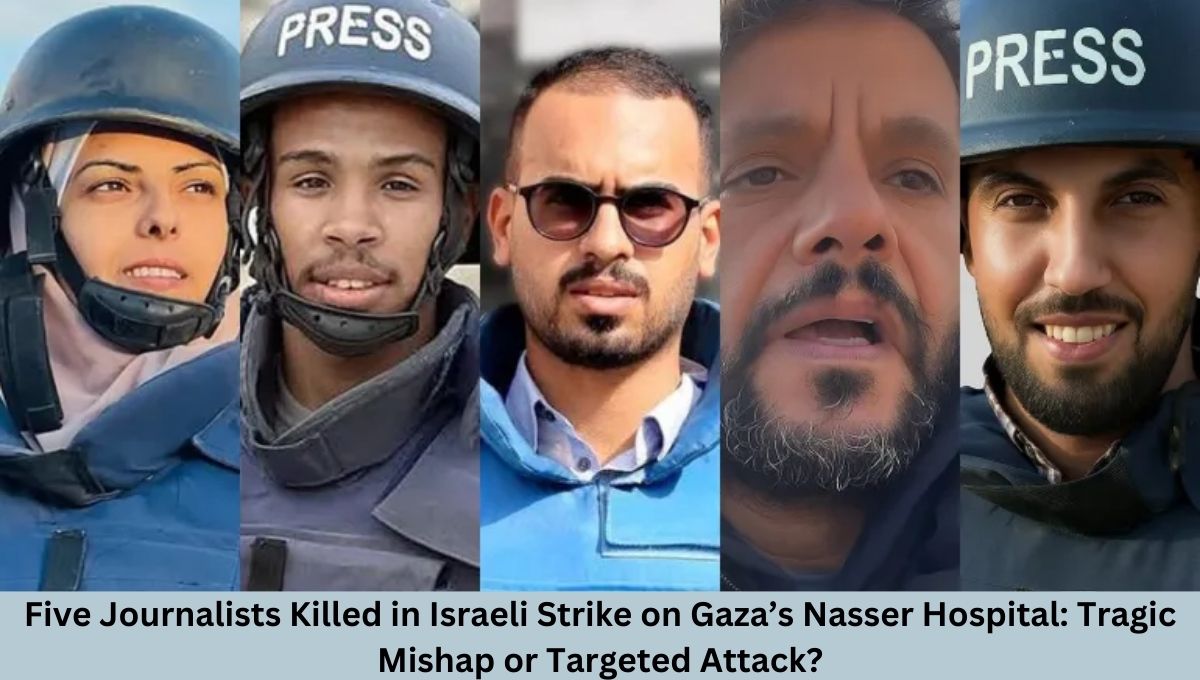
At least 20 people, including Five Journalists Killed in Israeli Strike on Gaza’s Nasser Hospital: Tragic Mishap or Targeted Attack? Two deadly Israeli airstrikes on Nasser Hospital in Khan Younis, southern Gaza, on Monday left at least 20 people dead, including five Palestinian journalists working for international media outlets such as Reuters, Al Jazeera, and the Associated Press.
The attack has triggered widespread condemnation from press freedom organisations, humanitarian groups, and world leaders, with Israeli Prime Minister Benjamin Netanyahu calling it a “tragic mishap.” The strikes came just two weeks after six other journalists were killed near Al-Shifa Hospital in Gaza City, making the Gaza war the deadliest conflict for journalists ever documented, according to the Committee to Protect Journalists (CPJ).
Five Journalists Killed in Israeli Strike on Gaza’s Nasser Hospital: Tragic Mishap or Targeted Attack?
Who Were the Journalists Killed in the Nasser Hospital Strike?
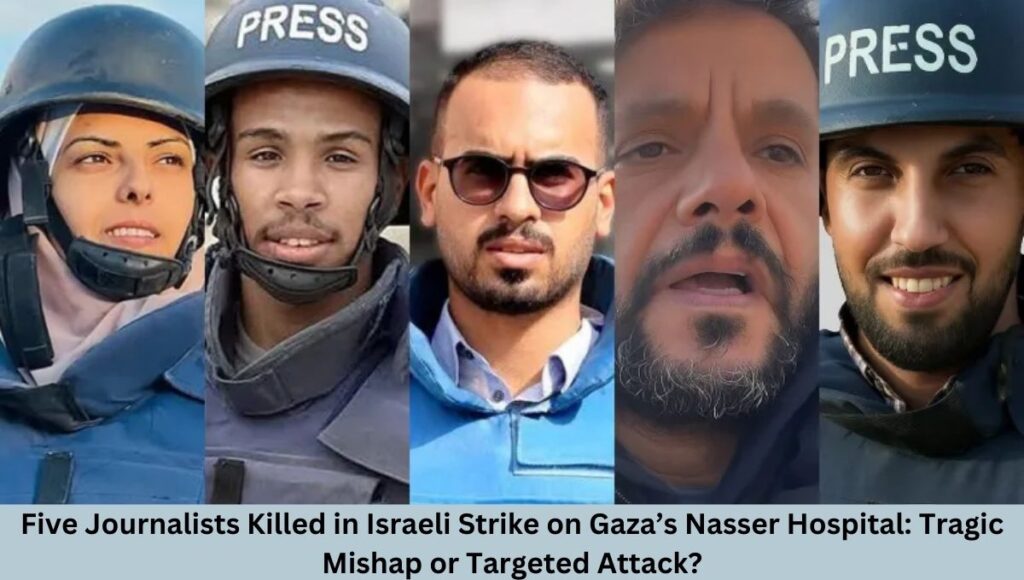
According to Gaza’s Government Media Office and confirmation from international news agencies, the five journalists killed were:
- Hussam (Hossam) al-Masri – A photojournalist and live cameraman contracted by Reuters, killed while operating a live feed on the hospital’s rooftop.
- Mohammed Salama – A cameraperson working with Al Jazeera, who was engaged to fellow journalist Hala Asfour.
- Mariam Abu Daqqa (Dagga) – A 33-year-old freelance journalist who contributed to the Associated Press and other international outlets.
- Moaz Abu Taha – A freelance journalist and photographer whose work had appeared with several international organisations, including Reuters.
- Ahmed Abu Aziz – A freelance photojournalist contributing to outlets such as Quds Feed Network and Middle East Eye.
These journalists had been documenting the humanitarian crisis in Gaza, focusing heavily on hospitals, food shortages, and the plight of civilians under bombardment.
The Story of Mariam Abu Daqqa
One of the most moving stories is that of Mariam Abu Daqqa, who was often stationed at Nasser Hospital to cover the struggles of medics treating malnourished children.
Displaced several times during the war, she had sent her 13-year-old son abroad for safety earlier in the conflict.
Her final Facebook posts reflected her despair and courage:
“When you see the soil covering the most precious thing you have, only then will you realize how trivial life is.”
Mariam’s death has devastated her colleagues at the Associated Press, which described her as a dedicated journalist committed to giving voice to Gaza’s voiceless.
Mohammed Salama: A Life Cut Short Before Marriage
Mohammed Salama, an Al Jazeera cameraman, was due to be married soon. He and his fiancée, journalist Hala Asfour, had been planning their wedding, hoping for peace to allow them to start a new life.
Al Jazeera described his killing as another brutal reminder of the relentless targeting of its journalists.
Reaction From Media Organisations
Reuters’ Response
A Reuters spokesperson expressed grief:
“We are devastated to learn that cameraman Hussam al-Masri, a contractor for Reuters, was killed in Israeli strikes on Nasser Hospital. Freelance journalist Moaz Abu Taha was also killed, and our photographer Hatem Khaled was wounded.”
Reuters also appealed for urgent medical assistance for Khaled, who was injured in the second strike.
Associated Press’ Statement
The AP said:
“We are doing everything we can to keep our journalists in Gaza safe as they continue to provide crucial eyewitness reporting in dangerous conditions.”
Al Jazeera’s Condemnation
Al Jazeera issued a strongly worded statement:
“The blood of our martyred journalists in Gaza has not yet dried before Israeli forces committed another crime against Al Jazeera cameraman Mohammed Salama.
Despite relentless targeting, Al Jazeera remains resolute in providing live coverage of Israel’s war in Gaza.”
Israel’s Response: “A Tragic Mishap”
Prime Minister Benjamin Netanyahu said the strike was a “tragic mishap” and insisted Israel did not intentionally target journalists, doctors, or civilians.
The Israeli Defense Forces (IDF) confirmed it had struck near the hospital but reiterated its stance that Hamas operates from civilian infrastructure, including hospitals.
The IDF announced it has opened a probe into the incident, but critics argue previous investigations into journalist deaths, including that of Shireen Abu Akleh in 2022, have yielded little accountability.
Witness Accounts and Footage From the Scene
Video evidence captured the devastating moments:
- A doctor was addressing reporters at the hospital entrance, showing bloodied clothes from victims of the first strike, when the second blast struck, shattering glass and sending people running.
- A livestream by Al-Ghad TV recorded emergency workers and journalists responding to the first attack when a second strike directly hit them.
- Reuters confirmed that its live feed, operated by Hussam al-Masri, shut down instantly at the moment of the first strike.
A Broader Pattern: Journalists Under Fire in Gaza
The Gaza war, which began on October 7, 2023, after a Hamas-led attack on Israel, has been catastrophic for journalists.
- CPJ reports: Nearly 200 journalists have been killed in Gaza since the start of the war.
- Gaza’s Government Media Office: Places the number even higher at 246, while Al Jazeera’s tally suggests 273 journalists.
- Comparison: More journalists have been killed in Gaza in less than two years than worldwide in the previous three years combined.
The CPJ calls this the deadliest conflict for journalists ever recorded.
International Reaction
The attack on Nasser Hospital has drawn swift condemnation:
- UN Secretary-General António Guterres: Called for “a prompt, impartial investigation” and repeated his demand for an “immediate and permanent ceasefire.”
- Philippe Lazzarini, UNRWA Chief: Said the killing of journalists is silencing the last voices reporting on Gaza’s humanitarian catastrophe.
- UK Foreign Secretary David Lammy: Expressed horror at the deaths.
- French President Emmanuel Macron: Called the strike “intolerable.”
Meanwhile, humanitarian groups such as Medical Aid for Palestinians (MAP) described the hospital scene as “unbearable” with victims scattered across wards.
The Silencing of Gaza’s Storytellers
The war has effectively cut off independent international media access to Gaza. Israel has barred foreign journalists from entering since October 2023, except under controlled access with IDF escorts.
This means local Palestinian journalists are the only eyes and voices reporting from the ground and they have been paying the highest price.
Their deaths not only rob families of loved ones but also silence critical accounts of Gaza’s suffering.
The Deadly Cycle
The deaths of Hussam al-Masri, Mohammed Salama, Mariam Abu Daqqa, Ahmed Abu Aziz, and Moaz Abu Taha follow a pattern seen repeatedly in Gaza:
- Journalists are killed.
- Their deaths briefly spark international outcry.
- Israel announces an investigation, calling it a “mistake.”
- No accountability follows.
This cycle has led Palestinian journalists and their families to believe that a career in journalism is effectively a death sentence.
Conclusion: A War on Journalism
The strike on Nasser Hospital not only killed five journalists but also struck at the heart of press freedom and humanitarian protection under international law. As the Gaza war continues, the international community faces mounting pressure to ensure accountability and protect journalists documenting one of the most devastating conflicts of the 21st century.
Without them, the stories of Gaza’s suffering risk being buried under rubble and forgotten.
Also Read: Israel’s justification for Gaza hospital attack false, Reuters probe finds
Also Read: Over 100 Killed in Israeli Airstrikes on Gaza as Humanitarian Crisis Deepens
Related Posts:
- Trump’s 20-Point Gaza Peace Plan Gains Urgent Global…

- 17-Year Shock Verdict: Imran Khan Jailed as Protests Loom

- 7 Shocking Twists in Imran Khan Death Rumours and Jail Chaos

- 7 Shocking Strikes That Expose Gaza Ceasefire Fragility

- Gaza Horror: Israeli Airstrikes Kill Dozens,…

- 7 Urgent Revelations as Imran Khan’s Isolation…