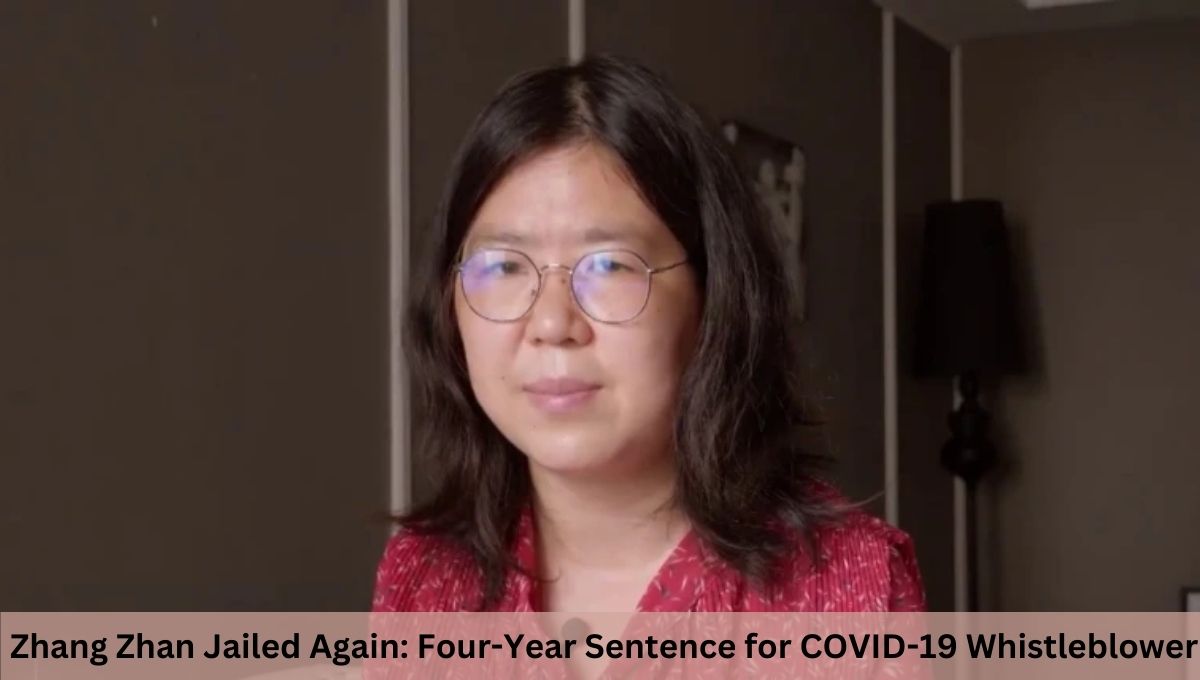
“Information Hero” Zhang Zhan Jailed Again: Four-Year Sentence for COVID-19 Whistleblower. China has once again jailed Zhang Zhan, a citizen journalist who became an international symbol of courage after exposing the COVID-19 chaos in Wuhan during the early days of the pandemic.
Rights groups confirmed that Zhang, 42, was sentenced on Friday to another four years in prison on the familiar charge of “picking quarrels and provoking trouble.” The charge, routinely used by Chinese authorities to silence dissenting voices, underscores Beijing’s ongoing crackdown on press freedom and independent reporting.
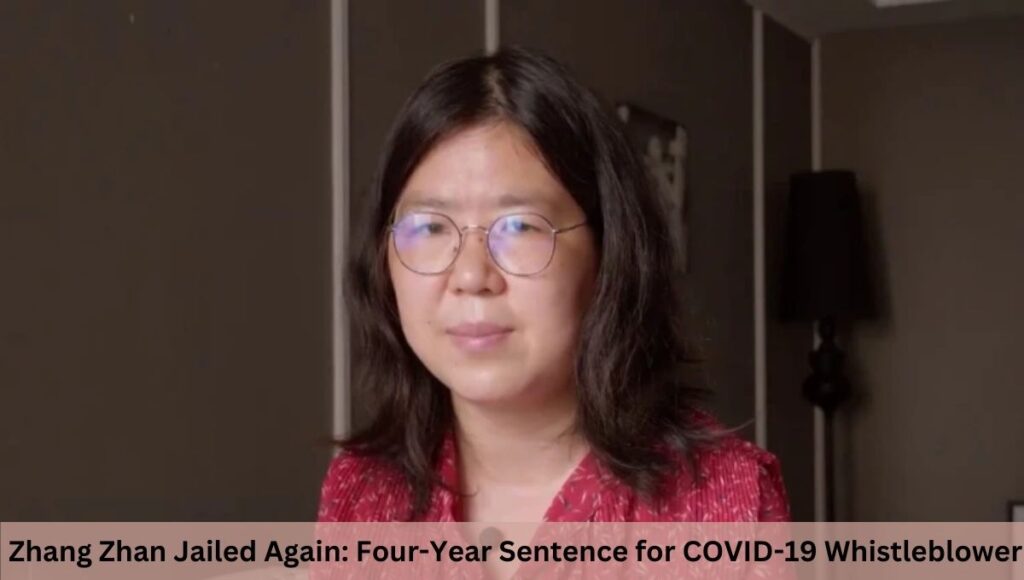
Zhang Zhan Jailed Again: Four-Year Sentence for COVID-19 Whistleblower
Background: From Wuhan Whistleblower to Global Symbol
Zhang Zhan first rose to prominence in 2020, when she traveled to Wuhan, then the epicenter of the coronavirus outbreak. Using her phone, she filmed crowded hospitals, overwhelmed staff, and chaotic government responses.
Her videos — posted online and shared internationally — provided a stark contrast to Beijing’s carefully controlled narrative that sought to project competence and calm.
- In May 2020, she was arrested for her reporting.
- In December 2020, a Shanghai court sentenced her to four years in prison.
- During her detention, Zhang went on a hunger strike to protest her treatment, leading authorities to restrain her and force-feed her via gastric tube.
Despite deteriorating health, she became a symbol of resistance for Chinese journalists and activists worldwide.
Zhang completed that sentence in May 2024, only to be detained again three months later.
The Latest Trial in Shanghai
On Friday, Zhang faced trial in Shanghai under heavy restrictions.
- Diplomats from Europe and North America who attempted to observe were denied entry, with authorities citing “paperwork issues.”
- Human rights groups reported that the proceedings were kept deliberately opaque, continuing Beijing’s pattern of secrecy in politically sensitive trials.
- The court sentenced her to four more years in prison, again under the vague offense of “picking quarrels and provoking trouble.”
According to Reporters Without Borders (RSF), the charges this time are connected to Zhang’s posts on overseas platforms about China’s human rights abuses. Authorities have not publicly detailed her alleged offenses.
Also Read: China Extends Prison Term Of Journalist Zhang Zhan For COVID-19 Reporting, Human Rights Coverage
Rights Groups Condemn the Sentence
International outcry was swift.
- Aleksandra Bielakowska, RSF Asia-Pacific advocacy manager:
“Zhang Zhan sacrificed everything to expose abuses and human rights violations by the Chinese regime. She should be celebrated globally as an ‘information hero,’ not trapped in brutal prison conditions.”
- Beh Lih Yi, Asia-Pacific director at the Committee to Protect Journalists (CPJ):
“This is the second time Zhang Zhan has faced trial on baseless charges that amount to nothing more than a blatant act of persecution for her journalism work. Chinese authorities must drop all charges and free her immediately.”
Both groups demanded Zhang’s immediate release, calling the sentencing another act of persecution against independent voices.
Press Freedom in China: A Bleak Picture
China is one of the world’s worst environments for press freedom.
- According to RSF’s 2025 World Press Freedom Index, China ranked 178th out of 180 countries.
- At least 124 journalists are currently detained, making China the world’s largest jailer of media workers.
- Charges like “picking quarrels and provoking trouble” are commonly used to criminalize free speech.
Zhang’s ordeal is emblematic of a broader pattern of censorship: Beijing promotes the image of transparency — including recently passing a law to accelerate public health emergency reporting — while silencing independent reporters who attempt to hold the state accountable.
The “Quarrels” Charge: A Tool to Silence
The charge of “picking quarrels and provoking trouble” has become a catch-all offense in China’s legal system.
- Officially, it is meant to apply to public order violations.
- In practice, it has been weaponized against journalists, bloggers, and activists.
- Zhang was previously convicted under this charge in 2020, and again in 2025.
Legal scholars argue it gives the state broad latitude to suppress dissent without presenting concrete evidence.
A Timeline of Zhang Zhan’s Ordeal
- Early 2020: Zhang travels to Wuhan, documents the crisis, and shares videos online.
- May 2020: Arrested and charged with “picking quarrels and provoking trouble.”
- December 2020: Sentenced to four years in prison. Begins hunger strike.
- May 2024: Released at the end of her sentence.
- August 2024: Detained again, reportedly for posts about human rights abuses.
- September 2025: Sentenced to another four years in Shanghai.
Her persistence in speaking out, despite health risks and imprisonment, has inspired many but also left her physically fragile.
Hunger Strikes and Health Concerns
During her first imprisonment, Zhang began a hunger strike in protest.
- Authorities reportedly restrained her hands and force-fed her through a gastric tube.
- By late 2021, her health had deteriorated so badly that activists feared she might die in custody.
- Her eventual release in 2024 was greeted with relief, but observers noted she appeared weakened and frail.
Her supporters worry that another four-year sentence could have devastating consequences for her health.
International Diplomatic Silence
While diplomats attempted to observe Zhang’s latest trial, international governments have largely remained muted.
- Reuters reported that China’s Foreign Ministry could not be reached for comment.
- Western officials have avoided sharp criticism, reflecting the sensitive balance of relations with Beijing.
- Rights groups argue that silence emboldens China to continue persecuting journalists without accountability.
The Irony of New Emergency Law
Zhang’s sentencing comes just a week after Beijing passed a new law designed to improve public health emergency reporting.
- The law allows citizens to bypass the traditional hierarchical reporting structure in times of crisis.
- Officially, it aims to prevent delays in identifying and responding to outbreaks.
- Critics argue the contrast is stark: while Beijing claims to empower citizens in emergencies, it jails those like Zhang who actually reported truthfully.
This contradiction highlights what rights groups describe as China’s double narrative — projecting openness while practicing repression.
Why Zhang Matters
Zhang’s case resonates for several reasons:
- Symbol of COVID-19 truth-telling: She provided an alternative to China’s early pandemic narrative.
- Test of global resolve: Her persecution highlights the cost of silence from democracies.
- Voice for the voiceless: She represents hundreds of less-known Chinese journalists silenced in recent years.
By refusing to stay silent even after serving one sentence, Zhang embodies the resilience of citizen journalism in the face of authoritarian suppression.
Global Call to Action
Human rights organizations are urging the international community to press Beijing harder.
- RSF labeled Zhang a global “information hero.”
- CPJ demanded “immediate release.”
- Activists say governments should raise Zhang’s case in bilateral meetings, trade talks, and human rights dialogues.
So far, however, there is no sign of coordinated international action.
Conclusion: The Fight for Truth in Authoritarian Times
The jailing of Zhang Zhan for another four years reflects China’s unrelenting war on independent journalism.
While Beijing boasts of reforms to accelerate health reporting, it continues to punish those who report inconvenient truths.
Zhang’s courage — from her Wuhan reporting to her hunger strikes — has made her a symbol of press freedom and human resilience.
But her story also raises hard questions: How much longer can the world stand by as journalists are silenced, jailed, and broken for telling the truth? For now, Zhang Zhan remains behind bars in Shanghai, her fate a reminder of the high cost of speaking out in China — and of the unfinished global fight for press freedom.
Also Read: How B-2 Bomber Secrets Were Sold to China: The Spy Story of Noshir Gowadia