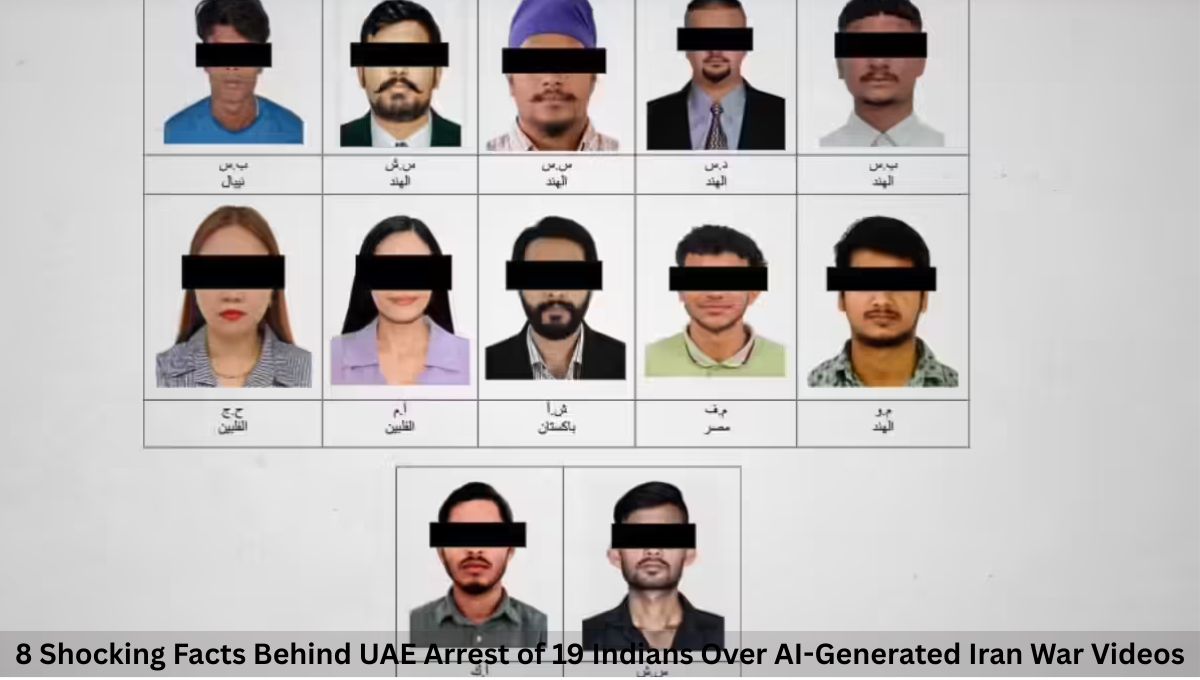
8 Shocking Facts Behind UAE Arrest of 19 Indians Over AI-Generated Iran War Videos that triggered public panic. Authorities in the United Arab Emirates have launched a major crackdown on social media misinformation amid the escalating conflict in the Middle East, arresting 35 individuals — including 19 Indians — accused of sharing misleading or fabricated video content related to the ongoing Iran war.
According to officials, many of the videos circulating online included manipulated footage or artificial intelligence-generated scenes that falsely portrayed missile attacks, explosions, or damage to key locations within the UAE.
The government says such content caused public panic and risked exposing sensitive information about the country’s security infrastructure during a time of heightened regional tensions. Those detained have been referred for expedited legal proceedings and could face significant prison sentences and fines if convicted.
The move reflects growing global concerns about the role of misinformation and AI-generated content during geopolitical crises.
8 Shocking Facts Behind UAE Arrest of 19 Indians Over AI-Generated Iran War Videos
Crackdown Comes Amid Escalating Iran War
The arrests come as the conflict involving Iran, the United States, and Israel continues to escalate across the Middle East.
Since the war began earlier this year, several Gulf countries have experienced drone and missile threats linked to regional hostilities.
The UAE, which hosts major international businesses and strategic infrastructure, has remained on high alert due to its geographic proximity to potential conflict zones.
Key cities including Dubai, Sharjah, and the capital Abu Dhabi are considered within range of potential missile strikes.
Authorities say the spread of false videos showing explosions, attacks on landmarks, or damage to infrastructure could create unnecessary panic among residents and investors.
Given the UAE’s status as a global financial hub and tourism center, officials have stressed the importance of maintaining stability and preventing the spread of misinformation.
How the Arrests Unfolded
The UAE attorney-general ordered the arrests following an investigation that monitored online activity across multiple social media platforms.
Authorities say the suspects were identified after weeks of electronic surveillance and digital tracking of misleading posts related to the ongoing war.
According to the government, the arrests occurred in two phases.
First Wave of Arrests
Earlier, authorities detained 10 individuals accused of publishing misleading videos online. Among those arrested in this initial group were two Indian nationals.
These individuals were reportedly questioned by prosecutors and placed in custody pending further investigation.
Second Wave of Arrests
The latest crackdown targeted an additional 25 suspects of various nationalities, including 17 Indians.
Combined with the earlier arrests, the total number of individuals detained now stands at 35.
Officials say the suspects will face fast-tracked legal proceedings due to the seriousness of the alleged offenses.
Three Categories of Alleged Violations
Investigators say the suspects were divided into three groups based on the type of content they circulated online.
Each group allegedly played a different role in spreading misleading information during the conflict.
1. Sharing Real Footage With Misleading Narratives
The first group consisted of 10 individuals who allegedly circulated authentic video clips showing missiles passing through the UAE’s airspace or being intercepted by defense systems.
However, officials say the suspects added dramatic commentary and sound effects that falsely suggested active attacks or major damage.
Some of the videos also showed gatherings of people watching missile interceptions while narrators described them as ongoing assaults.
Authorities believe such posts could cause unnecessary panic among the public and undermine trust in official information channels.
This group included individuals from several countries:
- Five Indians
- One Pakistani
- One Nepali
- Two Filipinos
- One Egyptian
Officials said the videos also risked exposing the capabilities of the UAE’s air defense systems.
2. AI-Generated and Fabricated Videos
The second group allegedly created or shared entirely fabricated video clips using artificial intelligence.
According to investigators, the footage showed dramatic scenes such as explosions, missile strikes, and fires across major UAE cities.
In some cases, creators added national flags or dates to make the fabricated videos appear credible.
Other posts recycled footage from incidents outside the UAE but falsely claimed the scenes were filmed within the country.
Authorities say these videos were specifically designed to mislead viewers and amplify fear during a period of regional instability.
This group consisted of seven individuals, including:
- Five Indians
- One Nepali
- One Bangladeshi
Officials said such AI-generated content is particularly dangerous because it can spread rapidly on social media and be mistaken for authentic footage.
3. Content Praising a Hostile State
The third group of suspects allegedly posted content praising a foreign country involved in the conflict and glorifying its political and military leadership.
Authorities say the posts portrayed regional military attacks as achievements and promoted propaganda narratives that could harm the UAE’s national interests.
According to investigators, these posts also circulated speeches or messages supporting the military actions of that state.
Among the six individuals accused in this category:
- Five were Indians
- One was Pakistani
Officials said such content could influence public opinion and contribute to misinformation campaigns during wartime.
Additional Charges Against Two More Individuals
Authorities also confirmed that two additional suspects — both Indian nationals — face charges related to similar offenses.
Their cases are being investigated separately but involve the circulation of misleading or manipulated digital content.
The public prosecution has ordered their preventive detention while legal proceedings continue.
Legal Consequences Under UAE Law
The UAE maintains strict laws governing misinformation and online conduct, particularly during national security situations.
Officials say individuals found guilty of spreading misleading or fabricated content can face severe penalties.
Under UAE law, the offenses allegedly committed by the suspects carry:
- A minimum prison sentence of one year
- A fine of at least 100,000 UAE dirhams (approximately $27,000)
Authorities say the penalties reflect the seriousness of spreading misinformation during times of conflict.
The government has also warned that additional penalties could apply depending on the severity of the violations.
Why Authorities Consider Such Content Dangerous
Officials say the circulation of misleading videos during a conflict can have serious consequences.
Public Panic
False reports of explosions or missile strikes can trigger panic among residents, especially in densely populated urban areas.
Such panic could lead to unnecessary evacuations, emergency calls, and disruptions to public life.
Exposure of Security Infrastructure
Videos showing air defense systems or interception locations could potentially reveal sensitive information about national security capabilities.
Experts warn that hostile actors might use such information to analyze vulnerabilities.
Misinformation Campaigns
Governments are increasingly concerned about coordinated misinformation campaigns during geopolitical crises.
Fabricated videos or misleading narratives can be used to influence public opinion or spread propaganda. Authorities say these risks make strict enforcement of misinformation laws essential.
Residents Previously Warned About Sharing Sensitive Content
The UAE government had already issued several warnings urging residents not to share unverified information related to security incidents.
The National Media Authority advised the public to avoid filming missile interceptions or posting videos from attack sites.
Officials also warned that sharing such footage could reveal important details such as road access points, security arrangements, and civilian movement patterns.
These details, authorities said, could potentially be exploited by hostile entities. Residents were encouraged to rely only on official sources for information about security developments.
Rising Regional Tensions Increase Security Concerns
The crackdown on misinformation comes as tensions across the Gulf region remain extremely high.
Iran has launched numerous drone and missile attacks in response to military strikes carried out by the United States and Israel.
Although many of these attacks have been intercepted, some incidents have caused damage or disruption across parts of the region.
Reports indicate that Gulf countries have collectively intercepted thousands of drones and hundreds of missiles since the conflict began.
The UAE has been among the countries most frequently targeted.
Missile Debris and Drone Incidents in the UAE
In recent weeks, several incidents involving intercepted drones or missiles have been reported within the UAE.
In one case, debris from an intercepted projectile reportedly struck a building in Dubai’s financial district.
Witnesses described hearing loud explosions followed by clouds of smoke rising above the skyline. Another incident involved a drone falling near the Dubai International Financial Centre.
Although no major casualties were reported, the events heightened public anxiety and increased security measures across the country.
Authorities say such incidents demonstrate why misinformation can be particularly harmful during periods of military tension.
Economic Importance of Stability in the UAE
Maintaining public confidence is especially important for the UAE because of its role as a major global business hub.
Cities such as Dubai and Abu Dhabi host multinational corporations, financial institutions, and millions of expatriate workers.
The Dubai International Financial Centre alone houses numerous global banks, consulting firms, and technology companies.
Any perception of instability could affect investment flows, tourism, and international business activity. For this reason, authorities say combating misinformation is a key priority.
Global Concerns About AI-Generated Misinformation
The UAE arrests also highlight a growing global challenge: the rise of artificial intelligence-generated misinformation.
Advances in AI technology now allow individuals to create realistic videos depicting events that never occurred.
These “deepfake” videos can spread rapidly on social media platforms, sometimes reaching millions of viewers within hours.
During conflicts or political crises, such content can easily mislead the public.
Experts say governments around the world are struggling to develop effective strategies to counter this emerging threat.
Governments Increasingly Target Online Misinformation
The UAE is not the only country taking action against the spread of misleading content during the Iran conflict.
Reports from Iran indicate that authorities there have also arrested hundreds of people accused of sharing information with foreign adversaries.
Some suspects were reportedly accused of filming military sites or transmitting sensitive information. Others allegedly circulated misleading posts about the conflict.
These actions illustrate how governments on all sides of the conflict are closely monitoring digital platforms.
Social Media’s Role in Modern Warfare
The current crisis underscores how social media has become an important battleground during modern conflicts.
Information — whether accurate or false — can spread instantly across borders through platforms such as X, Facebook, TikTok, and Instagram.
Videos filmed by ordinary citizens can sometimes reach millions of viewers before authorities have time to verify the content.
This rapid spread of information can complicate military operations and emergency responses.
Experts say governments must balance national security concerns with the protection of freedom of expression.
Public Responsibility in the Age of Digital Media
Authorities in the UAE have emphasized that maintaining public security is a shared responsibility.
Residents are being encouraged to verify information before sharing it online and to rely on official government sources for updates about security incidents.
Officials say responsible online behavior can help prevent misinformation from spreading during sensitive situations.
They also remind the public that sharing false or misleading content — even unintentionally — can have serious legal consequences.
A Warning to Social Media Users Worldwide
The arrests of 35 individuals in the UAE send a clear message about the risks associated with sharing unverified content during geopolitical crises.
As artificial intelligence tools become more widely available, the potential for fabricated videos and misleading narratives is likely to increase.
Governments across the world are expected to tighten regulations and monitoring of digital platforms to address this challenge.
For social media users, the episode serves as a reminder that what appears online may not always reflect reality.
Verifying information and exercising caution when sharing content has become more important than ever in an age where misinformation can spread at unprecedented speed.
Also Read: 7 Explosive Developments Behind Saudi Arabia’s Yemen Bombing and UAE’s Shock Withdrawal
Also Read: UAE arrests 19 Indians over war videos: Why social media posts landed them in trouble
Related Posts:
- 9 Shocking Truths Behind Netanyahu Death Rumors and…

- 10 Explosive Signals Trump Says Iran War Could End…
- 3 Explosive Conditions Iran Sets to End War with US…

- 12 Explosive Updates from Day 12 of the US-Israel…

- 10 Explosive Strikes: Israel Bombs Tehran Oil Depots…

- 7 Explosive Signs Russia Is Quietly Backing Iran in…