7 Shocking Oil Tanker Attacks Near Iraq: Iran Strikes Ignite Global Energy Crisis amid US-Israel-Iran conflict. A dramatic escalation in the Middle East conflict has triggered alarm across global energy markets after two oil tankers caught fire following powerful explosions near Iraq’s Basra coast. The attacks, widely suspected to involve Iranian explosive-laden boats or naval drones, have raised fears of a widening maritime conflict in the Persian Gulf — one of the most strategically important energy corridors in the world.
Authorities confirmed that at least one crew member was killed while dozens of sailors were rescued after the vessels erupted into flames. The incident occurred near Iraq’s Al-Faw port in territorial waters close to Basra, a key hub for the country’s oil exports.
The tanker attacks come amid intensifying hostilities involving Iran, the United States, and Israel, as well as mounting concerns over the safety of shipping routes in the Strait of Hormuz. With roughly one-fifth of the world’s oil passing through this narrow waterway each day, the threat to maritime traffic has triggered sharp volatility in global energy prices.
As geopolitical tensions rise and oil shipments face disruption, analysts warn that the latest attacks could mark a turning point in a rapidly expanding energy crisis with worldwide consequences.
7 Shocking Oil Tanker Attacks Near Iraq: Iran Strikes Ignite Global Energy Crisis
Tanker Explosions Near Iraq’s Basra Coast
Massive Fire Engulfs Two Oil Tankers
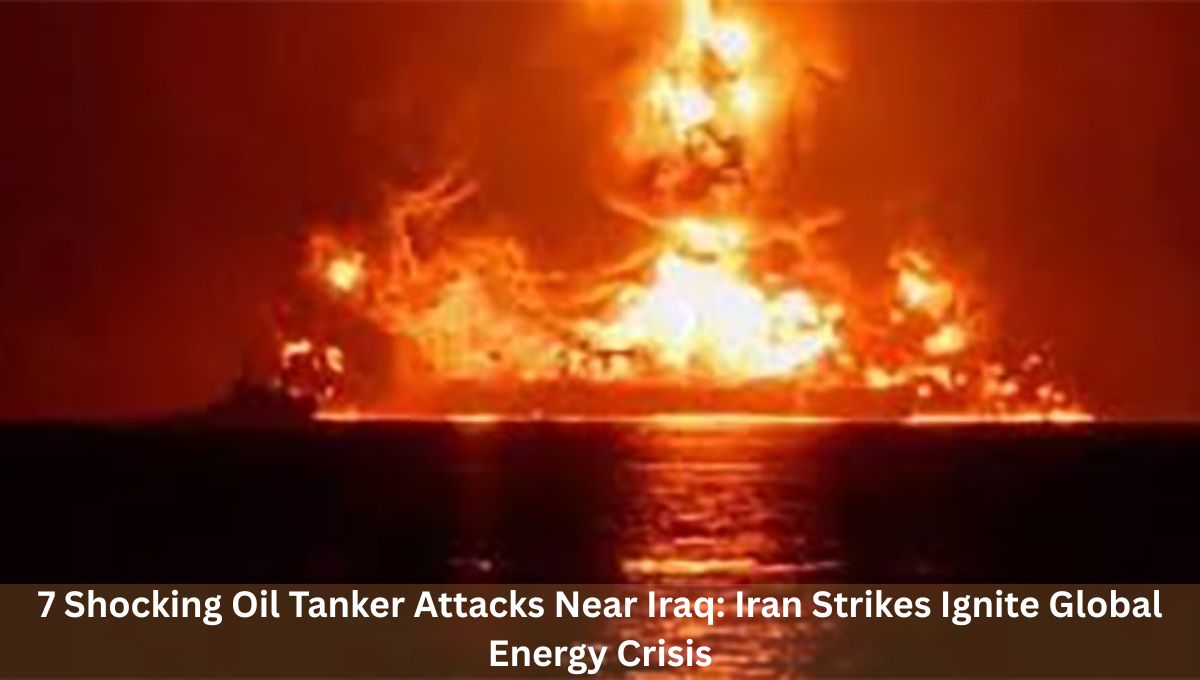
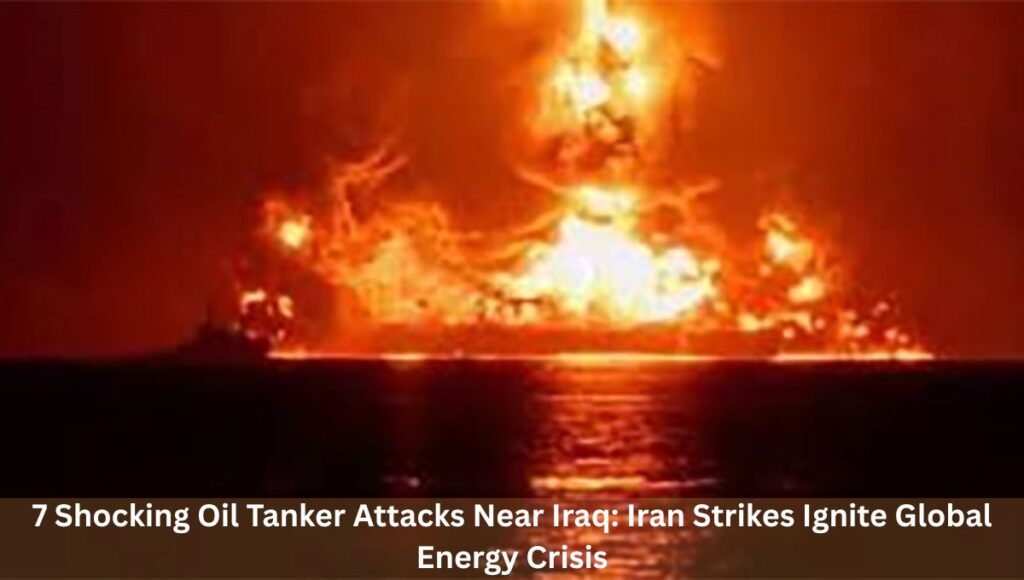
Late Wednesday night, two large oil tankers anchored near each other in the Persian Gulf were struck by explosions that quickly set both vessels ablaze.
The ships involved were identified as:
- Zefyros, a Maltese-flagged oil tanker operated by a Greek company
- Safesea Vishnu, a Marshall Islands-flagged tanker owned by US-based Safesea Transport Inc.
Both ships had reportedly loaded Iraqi crude oil and were believed to be carrying as much as 400,000 barrels of oil combined at the time of the attack.
Footage circulating online showed a huge fireball rising from the vessels, followed by thick black smoke spreading across the sea.
Flames were also visible on the water surface, suggesting that oil had spilled into the surrounding waters and ignited.
Rescue teams from Iraq’s port authorities rushed to the scene and evacuated crew members from both vessels.
Casualties and Rescue Operations
According to officials from Iraq’s General Company for Ports, 38 crew members were rescued from the burning tankers during emergency operations.
However, the attack also resulted in casualties.
Authorities confirmed that:
- One crew member was killed in the explosions
- Several others were initially reported missing
- Search operations continued for survivors in the surrounding waters
Later reports indicated that the deceased sailor was an Indian national, highlighting the international nature of shipping crews operating in the region.
The rescued sailors were transported to Basra in southern Iraq for medical checks and further investigation.
Suspected Iranian Involvement
Preliminary investigations suggest the attacks may have been carried out using explosive-laden boats or unmanned surface vessels, commonly known as naval drones.
Security analysts believe these vessels are designed to:
- Travel at high speed toward a target ship
- Detonate on impact
- Cause fires or catastrophic structural damage
Such weapons have become increasingly prominent in modern naval warfare.
Similar tactics have been widely used during the Russia-Ukraine war and in earlier attacks by Houthi militants in the Red Sea.
Maritime security experts say the technology allows attackers to strike large vessels with relatively low-cost equipment.
Unlike missiles or aerial drones, sea drones can carry heavier explosive payloads, potentially immobilizing large ships if they hit critical areas such as the engine room or fuel tanks.
Iran Claims Responsibility
Iranian state media later reported that the attacks were carried out by Iranian forces targeting vessels believed to be linked to the United States.
The statement said the operation involved underwater or surface drone attacks that caused the explosions on the tankers.
Iran has repeatedly warned that it would not allow oil shipments to move freely through the Gulf while the conflict with the United States and Israel continues.
Iranian officials have also warned that “not a single litre of oil” will leave the region if attacks on Iranian targets persist.
Growing Middle East Conflict
War Between Iran, the United States, and Israel
The tanker attacks come as part of a broader regional conflict that erupted following joint US-Israeli strikes on Iran nearly two weeks earlier.
Those strikes reportedly targeted:
- Iranian military infrastructure
- Nuclear program facilities
- Strategic command centers
The initial attacks were also reported to have killed Iran’s Supreme Leader, Ayatollah Ali Khamenei, dramatically escalating tensions in the region.
Iran has since vowed retaliation against American and Israeli interests across the Middle East.
According to conflict monitoring groups, the war has already resulted in approximately 2,000 deaths, including more than 1,100 children killed or injured, according to humanitarian agencies.
Expansion of Attacks Across the Gulf
The oil tanker explosions are only part of a growing pattern of strikes targeting energy and transport infrastructure across the region.
Recent incidents linked to the conflict include:
- Drone strikes on fuel storage tanks in Bahrain
- Attacks on oil facilities in Oman’s Salalah port
- Drone threats toward Saudi Arabia’s Shaybah oil field
- Missile or drone strikes targeting vessels near the United Arab Emirates
Several cargo ships and merchant vessels have also reported being hit by projectiles or naval drones while navigating the Gulf.
Maritime authorities say more than a dozen ships have been attacked since the conflict began.
Strait of Hormuz Crisis
A Vital Global Energy Corridor
At the center of the crisis lies the Strait of Hormuz, one of the most important shipping routes in the world.
The narrow waterway connects the Persian Gulf to the Arabian Sea and serves as a critical transit route for global energy supplies.
Each day, approximately:
- 20 million barrels of oil pass through the strait
- Roughly 20% of the world’s total oil consumption travels via this corridor
Major oil exporters relying on the route include:
- Saudi Arabia
- Iraq
- Kuwait
- United Arab Emirates
- Qatar
- Iran
Disruption to this route could severely impact global energy markets.
Iran’s Threat to Block Oil Shipments
Iran’s Islamic Revolutionary Guard Corps (IRGC) has warned that ships attempting to cross the Strait of Hormuz may be targeted.
Military officials have claimed that the strait is now effectively under Iranian control.
Reports indicate that Iran may have:
- Deployed sea mines in the channel
- Increased naval patrols
- Positioned missile batteries along its coastline
The combination of naval drones, mines, and missile threats has made shipping through the region extremely dangerous.
As a result, several oil companies and shipping firms have halted or delayed tanker operations in the Gulf.
Oil Prices Surge Amid Supply Fears
Energy Markets React
The attacks and growing instability have triggered sharp movements in global oil markets.
Oil prices recently surged to nearly $120 per barrel, the highest level in several years, before falling slightly amid hopes of diplomatic intervention.
However, renewed attacks pushed prices back above $100 per barrel, sparking concerns that prices could climb even higher.
Iranian military officials have warned that oil could reach $200 per barrel if the conflict continues and shipping routes remain blocked.
International Response to Stabilize Markets
In response to the growing crisis, the International Energy Agency (IEA) announced an emergency plan to release 400 million barrels of oil from global strategic reserves.
This marks the largest coordinated release of emergency oil stockpiles in history.
The United States alone plans to release 172 million barrels from its Strategic Petroleum Reserve in the coming weeks.
The goal is to stabilize markets and prevent a severe energy shock similar to those seen during the 1970s oil crises.
Impact on Global Shipping and Trade
Maritime Industry on High Alert
Shipping companies operating in the Gulf region have increased security measures and risk assessments.
Insurance premiums for vessels traveling through the region have skyrocketed as insurers classify the area as a high-risk war zone.
Some shipping companies are exploring alternative routes or delaying cargo shipments entirely.
Experts warn that prolonged disruption could affect:
- Oil exports from the Middle East
- Global fuel prices
- Supply chains for energy-dependent industries
Threats to International Commerce
The escalating maritime conflict could have ripple effects far beyond energy markets.
Possible consequences include:
- Increased transportation costs worldwide
- Delays in global trade routes
- Economic instability in energy-dependent nations
Many governments are now closely monitoring the situation as tensions continue to rise.
The Human Cost of the Conflict
Civilian and Maritime Casualties
While the geopolitical implications dominate headlines, the conflict has also resulted in significant human suffering.
Seafarers working on commercial ships are increasingly finding themselves caught in the crossfire of geopolitical disputes.
The death of an Indian crew member in the tanker attack underscores the vulnerability of international sailors working in high-risk regions.
Humanitarian groups have also reported thousands of civilian casualties since the broader war began.
Global Concerns Over Escalation
International organizations and governments have urged restraint to prevent further escalation.
Concerns include:
- Expansion of the conflict into neighboring countries
- Attacks on civilian infrastructure
- Long-term disruption of global energy supplies
Diplomatic channels are reportedly working behind the scenes to prevent a full-scale regional war.
Conclusion
The fiery destruction of two oil tankers near Iraq’s Basra coast represents a dangerous new phase in the escalating Middle East conflict.
What began as a regional military confrontation between Iran, the United States, and Israel has now spread into critical global shipping routes, threatening energy supplies and economic stability worldwide.
With naval drones, missile strikes, and threats to block the Strait of Hormuz, the conflict has transformed into a high-stakes struggle over global energy security.
As oil prices surge and shipping companies rethink operations in the Gulf, governments and international organizations face mounting pressure to de-escalate the crisis before it spirals further out of control.
For now, the flames rising from the burning tankers in the Persian Gulf serve as a stark reminder of how fragile global energy infrastructure can be in times of geopolitical conflict.
Also Read: 7 Shocking Reasons Trump Says Oil Spike Is “Worth It” to Stop Iran
Also Read: Six vessels attacked amid reports of Iranian drone boats, sea mines